Tuna Cut Guide: Master the Hierarchy for Your Next Gathering
Tuna is truly a fascinating fish, isn't it?
However, when you dive into the details, it can be quite complex.
Bluefin, Bigeye, Honmaguro, Billfish...
Why are there so many names and such complicated cuts?
When the Executive Chef explains it at a tuna omakase, it all seems to make sense.
"Aha, so that's what that is!" you might say, nodding along.
But the moment you step out of the restaurant? It's like your memory resets.
And you're back to being a "tuna novice" once again. Haha.
That's why I've decided to settle this once and for all.
I'm going to skip the overly technical anatomical explanations.
Instead, I'll organize the most essential 'Tuna Hierarchy (The Ranking)' for you.
Knowing just this will completely change your perspective the next time you enjoy tuna in Seoul.
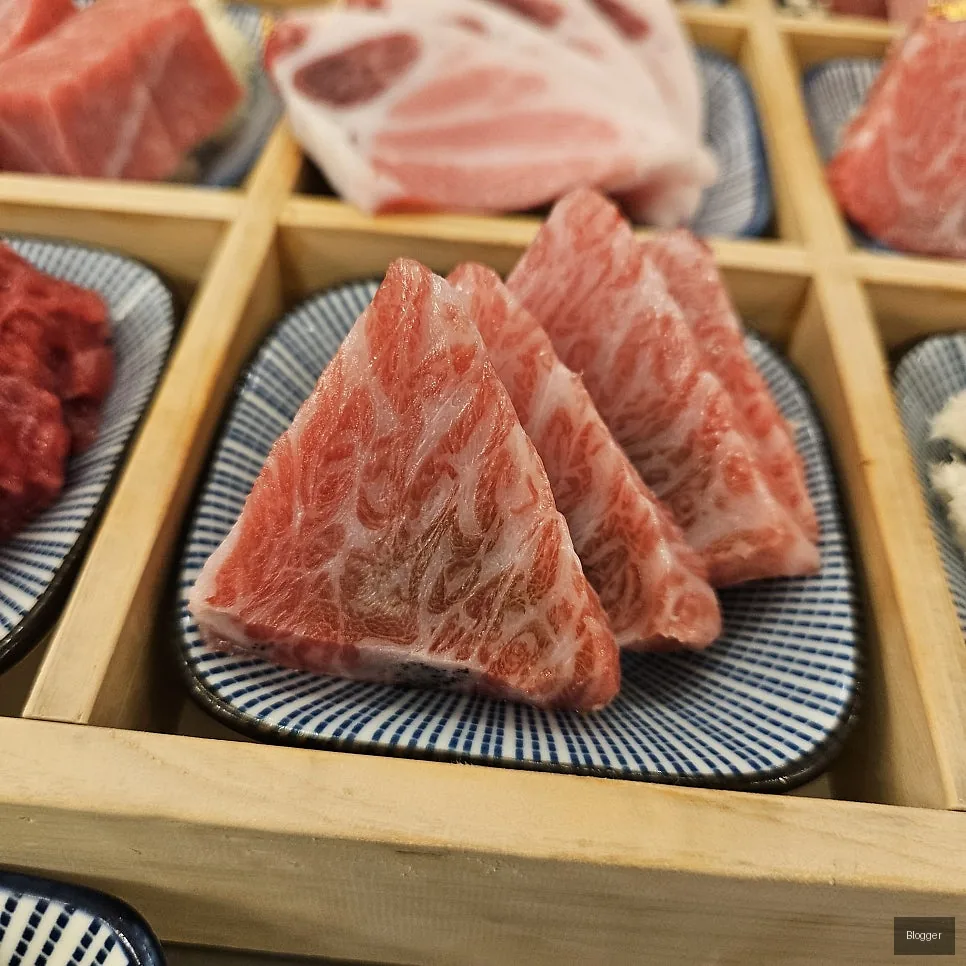
Bluefin Tuna Kamatoro (Collar Fat)
Rank 1 (The Emperor): Bluefin Tuna (Honmaguro)
"The Hermes of the tuna world. The most expensive and the most delicious."
1. Why is it the most expensive?
To survive in deep, cold waters, Bluefin tuna accumulate an incredible amount of fat (oil).
This results in dense marbling that surpasses even 1++ Grade (the highest grade) Korean beef.
Furthermore, global catches are strictly limited, making it a high-demand luxury item.
2. What does it taste like?
The moment it hits your tongue, it melts like cotton candy, coating your mouth in rich, savory oils.
If a menu proudly lists 'Bluefin Tuna' or 'Honmaguro,' it is well worth the premium price.
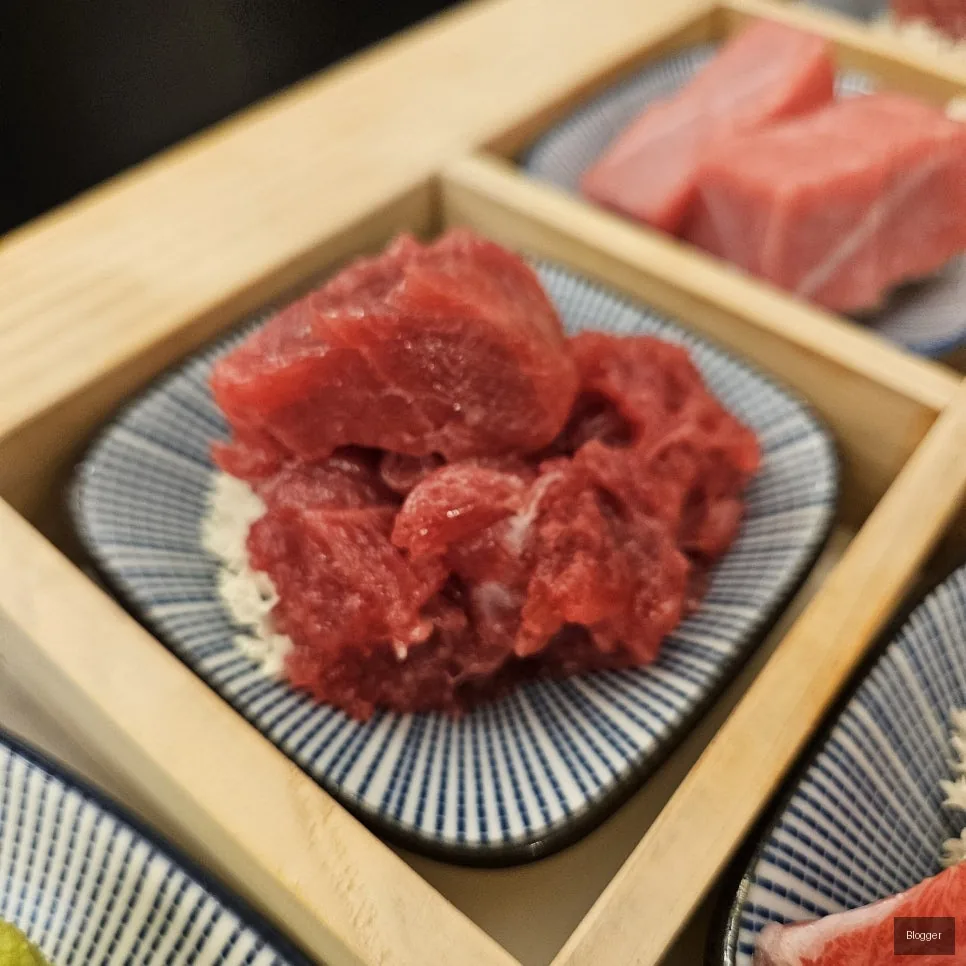
Bluefin Tuna Akami (Lean Red Meat)
Rank 2 (The Nobility): Bigeye Tuna & Yellowfin Tuna
"The most popular choices offering excellent value for money."
1. Why is it mid-range?
The catch volume is higher than Bluefin, leading to more reasonable pricing.
While Bigeye doesn't have as much fat as Bluefin, its akami (red meat) offers a clean, savory taste and a firm, satisfying texture.
2. The Value:
These are the staples of high-quality tuna specialty restaurants and premium unlimited tuna spots.
In the hands of a skilled chef with great thawing techniques, Bigeye akami can often be more enjoyable than mediocre Bluefin.
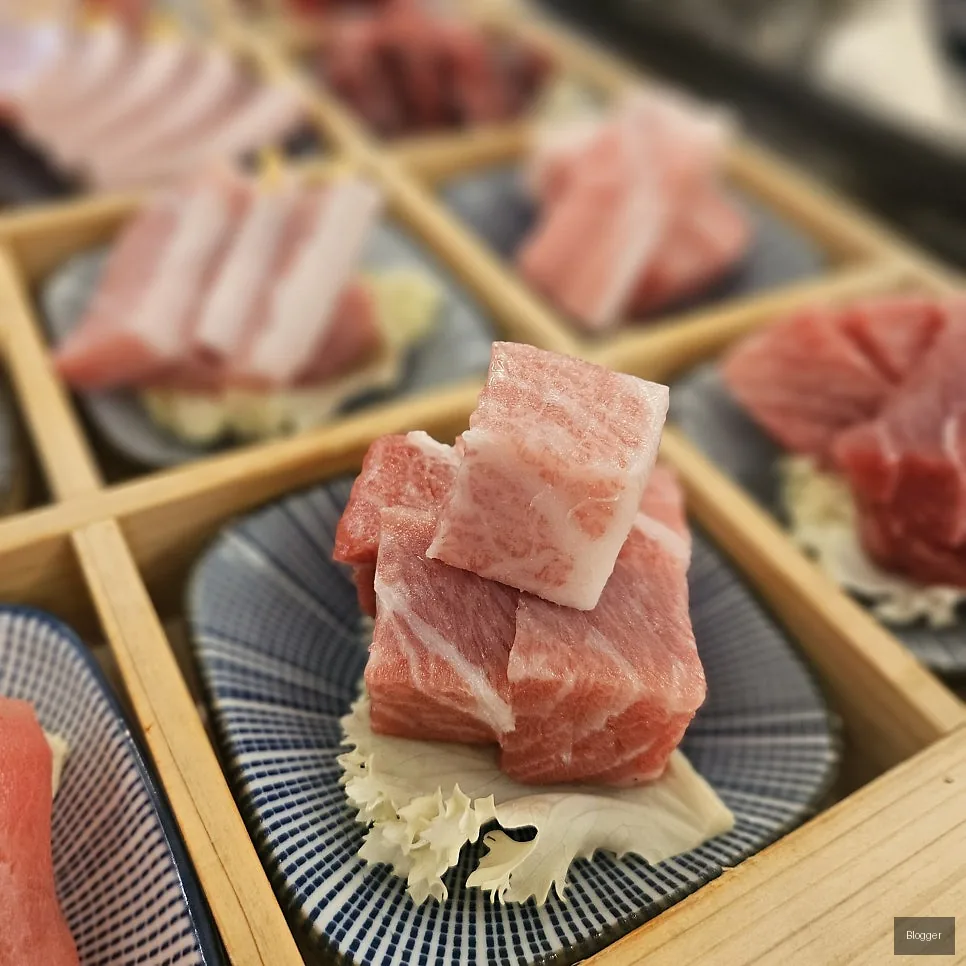
Diced Bluefin Tuna
Rank 3 (The Commoner): Skipjack & Albacore
"Used more for processing than for high-end sashimi."
1. Why is it affordable?
They are smaller and swim in schools in shallower waters, allowing for massive catches.
The main drawback is that they have almost no fat content.
2. The Value:
Because they lack oil, they can taste dry when served as sashimi.
Therefore, they are primarily used for 'Canned Tuna' or steamed and dried to make 'Katsuobushi' (bonito flakes).
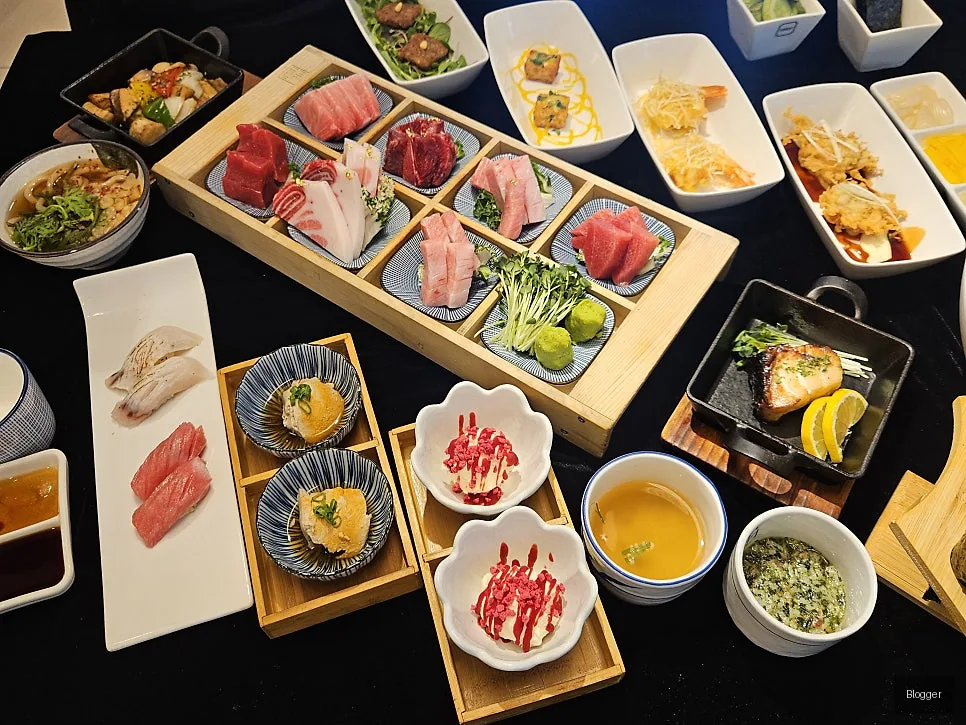
A Full Tuna Spread
Bonus Rank (The Non-Tuna): Billfish
"Technically not tuna. Mostly found in Sashimi Bowls (Hoe-deopbap)."
1. Why is it the cheapest?
Marlin and Sailfish have pointed snouts and are not true tuna (thunnus).
While they were served frozen in low-cost buffets in the 90s, modern premium tuna restaurants rarely use them as main sashimi.
Instead, their mild flavor makes them a popular choice for 'Hoe-deopbap' (Korean sashimi bowls).
2. The One Exception (Mekadoro): **Swordfish Belly (Mekadoro)** is a prestigious exception.
White with red specks, it offers a unique crunchy texture and a nutty richness, earning it a spot even in high-end tuna omakase courses.
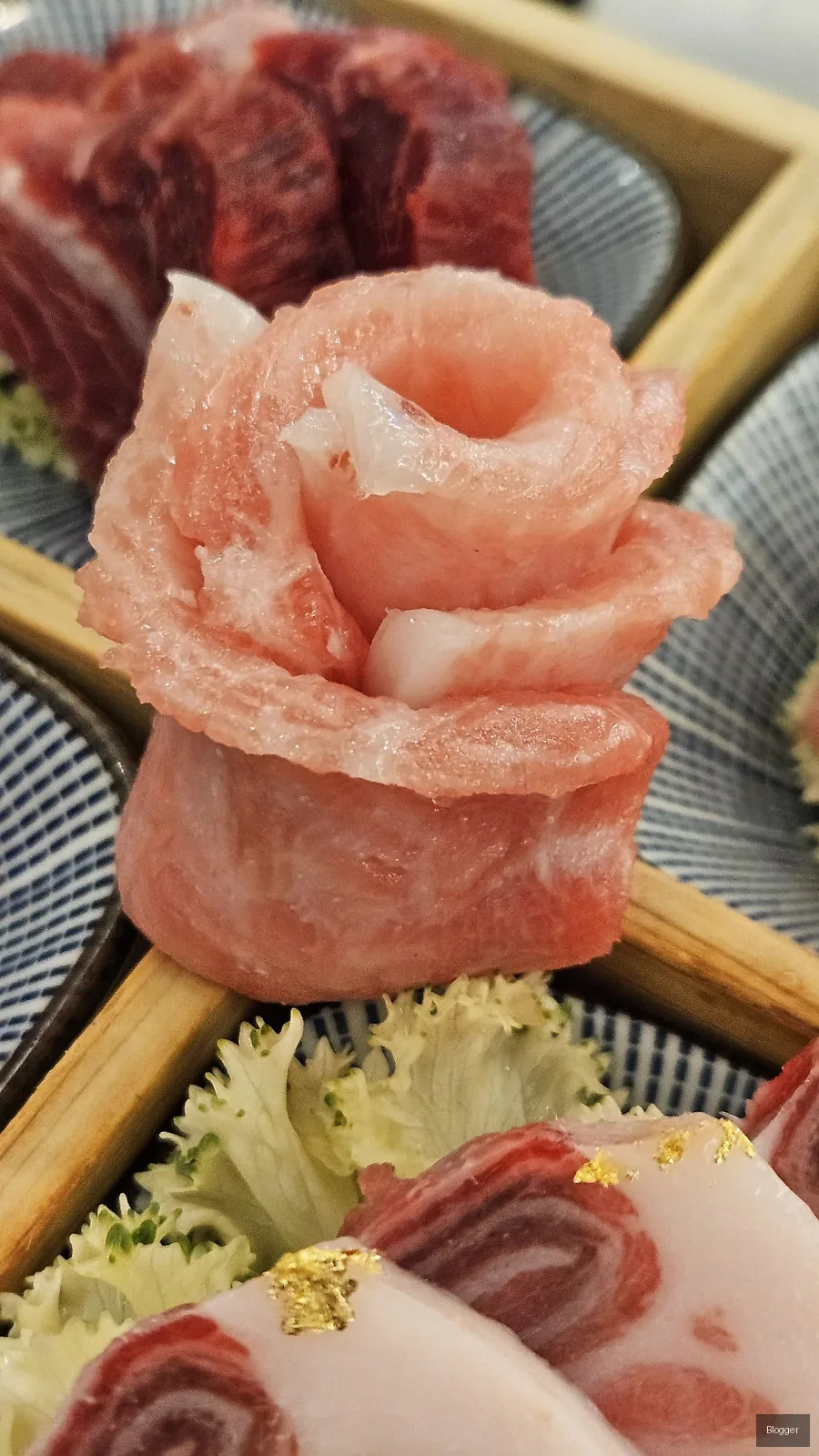
Tuna Blooming Like a Flower
Conclusion:
The next time you visit a tuna restaurant, keep a sharp eye out to see if you're eating Bluefin, Bigeye, or Billfish.
When you know what you're eating, you can truly appreciate the flavor—and even ask the chef for specific premium cuts with confidence!

.jpg)

댓글
댓글 쓰기