How to Choose High-Quality Tuna: The Ultimate Selection Guide
The quality of premium tuna omakase isn't just about the flavor. The marbling, the bloom of color, the removal of excess moisture, and the precision of the cut—these visual elements define the level of each piece. Here is why we say that at Goldtuna, you taste with your eyes first.
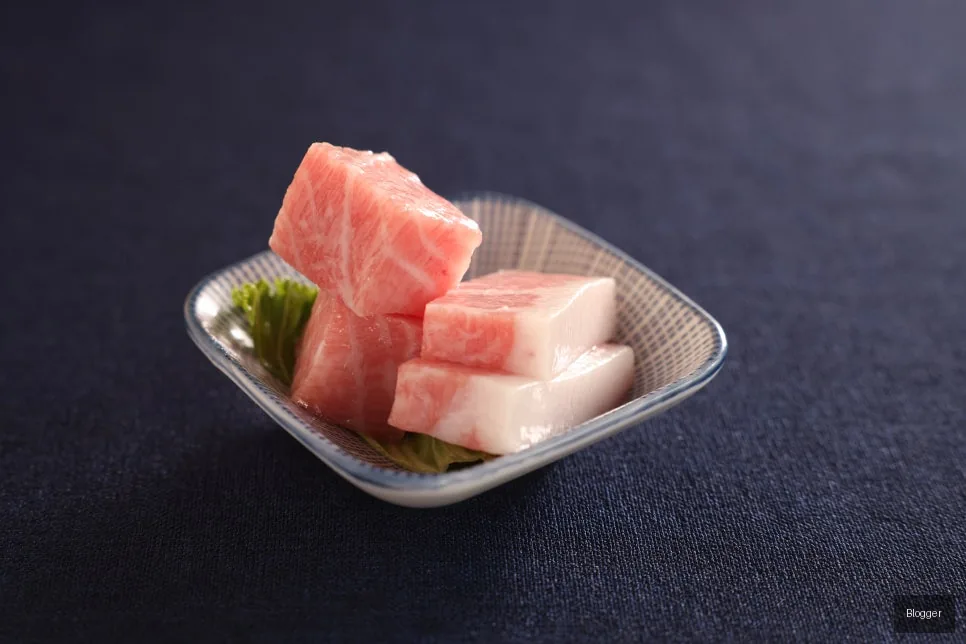
Bluefin Tuna Belly (Otoro)
The Visual Standards of High-End Tuna Sashimi
When people talk about the taste of food, they usually think of the tongue first. However, with premium tuna, the experience begins even before it reaches your mouth. You observe the brilliance of the color, the intricate marbling, the surface texture, and the overall form. Truly exceptional tuna reveals its quality through its visual "bloom" long before the first bite.
“The tuna experience starts before you eat.
The color and shape of a single piece
speak volumes about its superior quality.
— Mr. Tuna (The Owner Chef)
Premium Tuna Persuades with Its Color First
Tuna is naturally a "red" fish, with its deep hues coming from muscle pigments like myoglobin. When healthy fats are woven into these muscles, the color becomes softer, more delicate, and visually luxurious.
The vibrant color of tuna is directly related to the state of its myoglobin. When fat distribution is optimal, it creates a softer, more inviting impression. This is why high-quality tuna has a distinct grain and a unique brilliance that catches the light differently.
Just as mixing red and white creates a beautiful pink, the way white fat spreads across red tuna meat creates a sophisticated aesthetic. Marbling is not just about the amount of fat; it is the visible manifestation of the tuna's dignity.
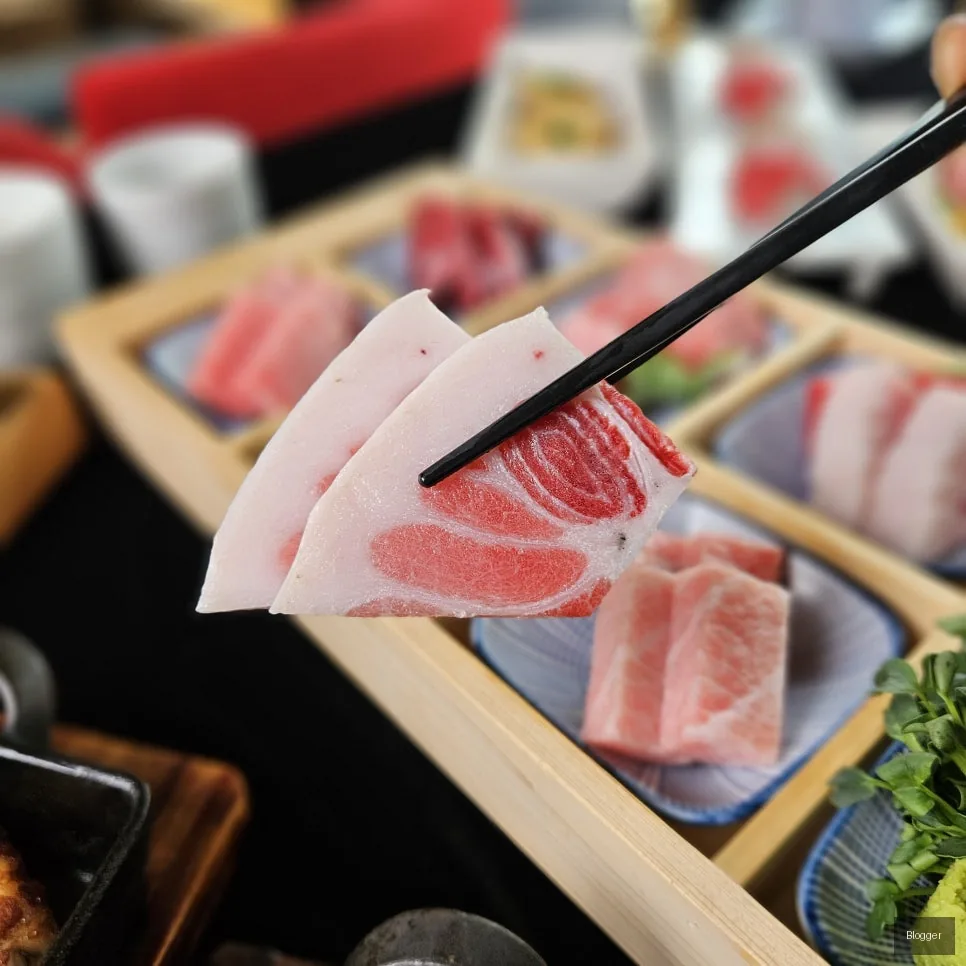
Bluefin Tuna Navel Belly (Sunazuri)
How the dignity of tuna is visually revealed:
-
Tuna is essentially a red-fleshed fish.
-
As white fat spreads evenly through the red meat, the visual impression softens.
-
Premium tuna shows its defined texture through its vibrant color.
The "Bloom": Color Emerges After Patient Thawing
Great tuna doesn't look its best the moment it is taken out. It requires patience. Only when it has been properly thawed and stabilized does the true color "bloom."
The color of frozen tuna changes based on thawing techniques, oxygen exposure, and myoglobin stability. Managing this post-thaw color stability is a core part of quality control. Thawing is not just about melting ice; it is closer to the process of "opening up" the color.
If it is under-thawed, the color remains dull. If rushed, the radiance stays locked away. But with patience, the tuna comes to life with a subtle, elegant glow.
I believe this color bloom is like a flower. No flower can be forced to bloom. It happens naturally when the time is right.
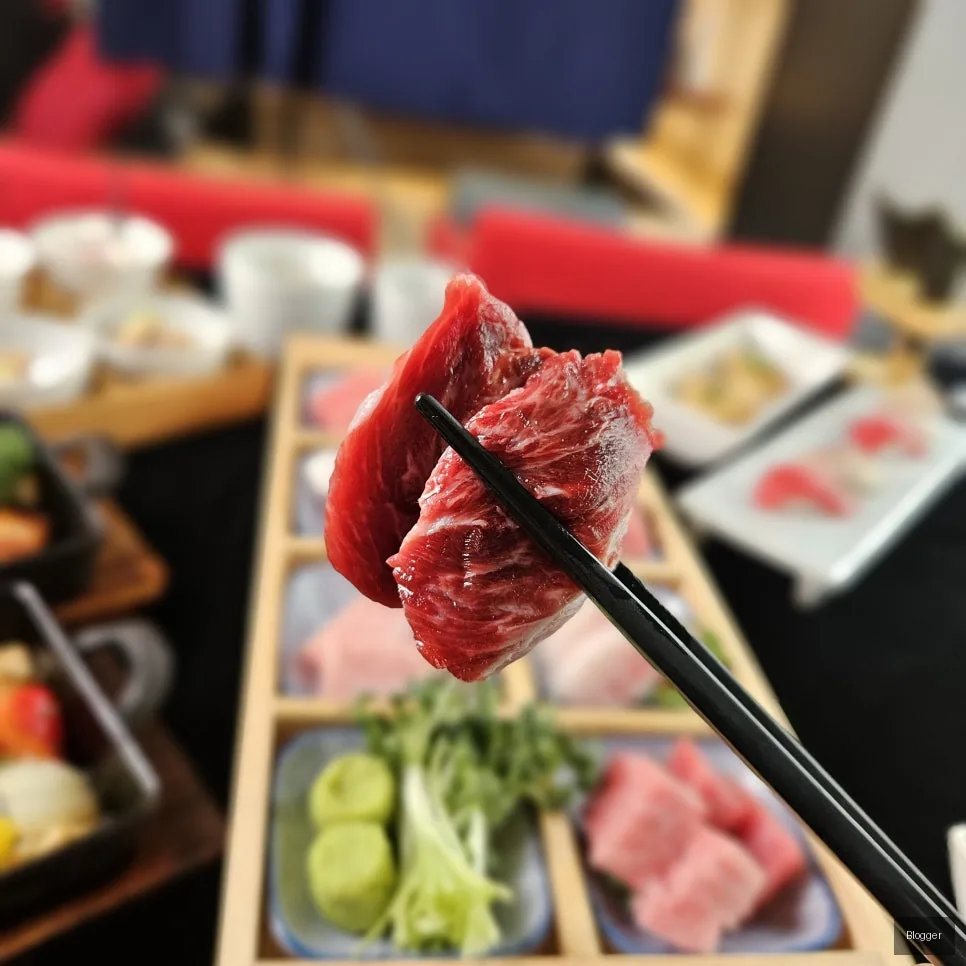
Bluefin Tuna Wing (Kama-toro)
-
Bloom is the result of patient waiting.
-
Sufficient thawing brings the color to life.
-
Premium tuna shines more through leisure than through haste.
Moisture Control: Bringing Clarity to the Tuna
Just as condensation forms on a cold glass window, moisture can linger on the surface of tuna. This moisture isn't just a cosmetic issue. It clouds the color, makes the surface look greasy, and creates a dull impression before the first taste.
Evaluating tuna quality relies heavily on color and appearance. If the surface state breaks down during storage or handling, the visual quality plummets. Therefore, managing surface moisture is a critical part of premium quality control.
If moisture remains on the surface, it tends to bleed out later, making the fish look messy rather than clean and crisp. Moisture removal is the final touch of craftsmanship that makes a single piece of tuna truly sharp and vivid.
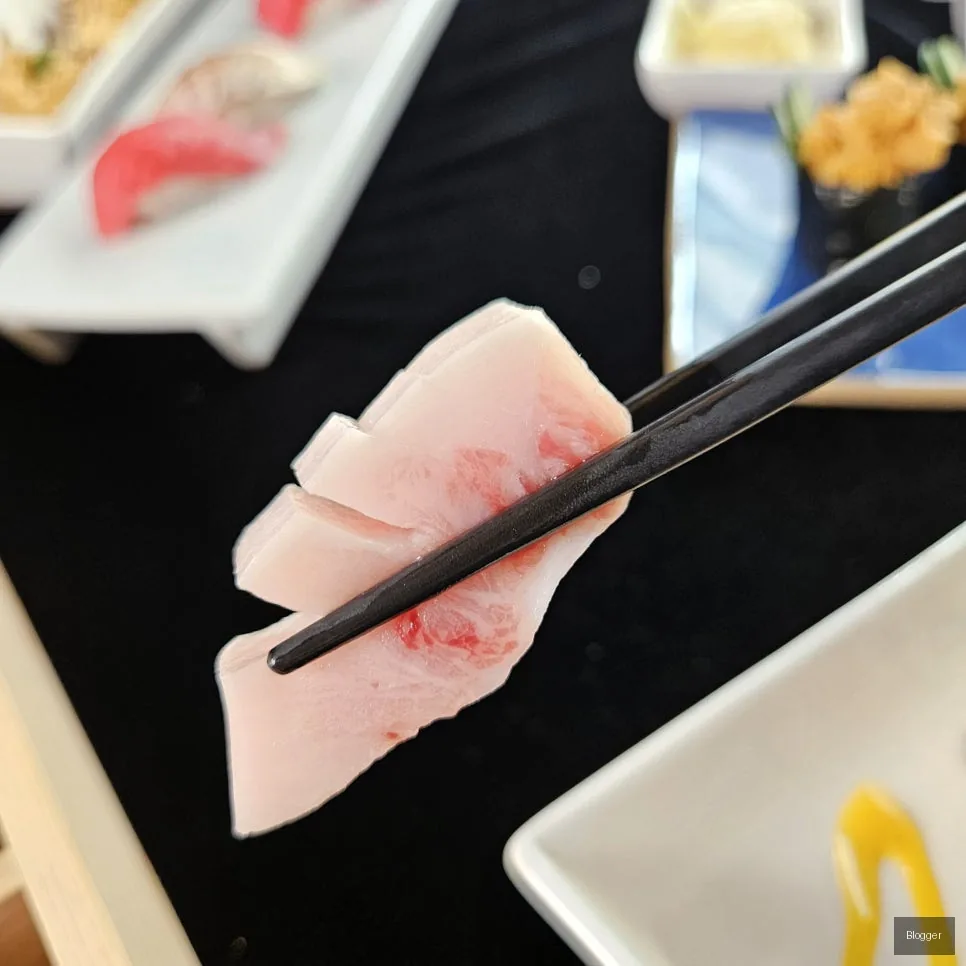
Swordfish Belly (Mekajiki)
-
Residual moisture makes the tuna look hazy.
-
A clean surface allows the brilliance of the color to stand out.
-
Moisture removal is the essence of quality management.
Precision Slicing: The Art of Completing the Form
Even the best ingredients lose their power if the cut is flawed. If sliced too thin, the form weakens and the texture collapses. Conversely, a thick, deliberate cut preserves the shape and clarifies the texture.
The same tuna can provide a completely different visual and textural experience depending on how it is sliced. At Goldtuna, we prioritize thick cuts to maintain the structural integrity, trap the juices, and provide a satisfying mouthfeel.
When I look at a perfectly executed cut, I am reminded of Mondrian’s divisions—how the way you divide space changes the entire impression. Tuna is, in essence, edible art. One stroke of the knife changes the shape; one shape changes the texture; one texture changes the memory.
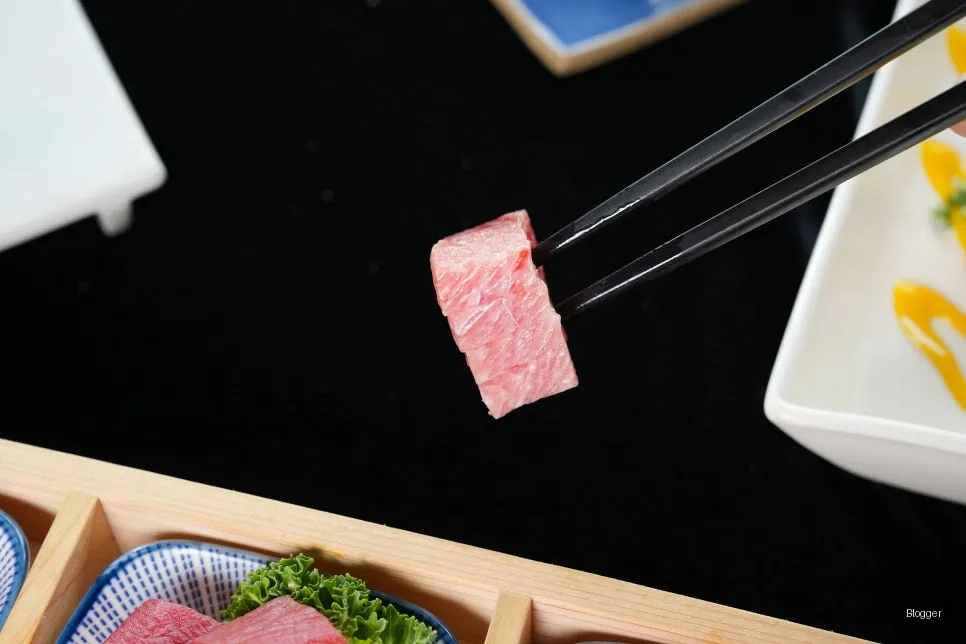
Southern Bluefin Tuna Front Belly
-
Thicker cuts prevent the form from collapsing.
-
Thicker cuts bring out the true texture of the fish.
-
Expert slicing perfects both the appearance and the palate.
The World of "Hwasik": Dining for the Eyes
In premium dining, we often speak of "Hwasik" (visual dining)—the idea that we eat with our eyes first. The harmony of colors, the balance of the arrangement, and the pairing of the dishware with the ingredients—all these start the meal before the first bite.
Tuna, in particular, is a dish where the visual component carries immense weight.
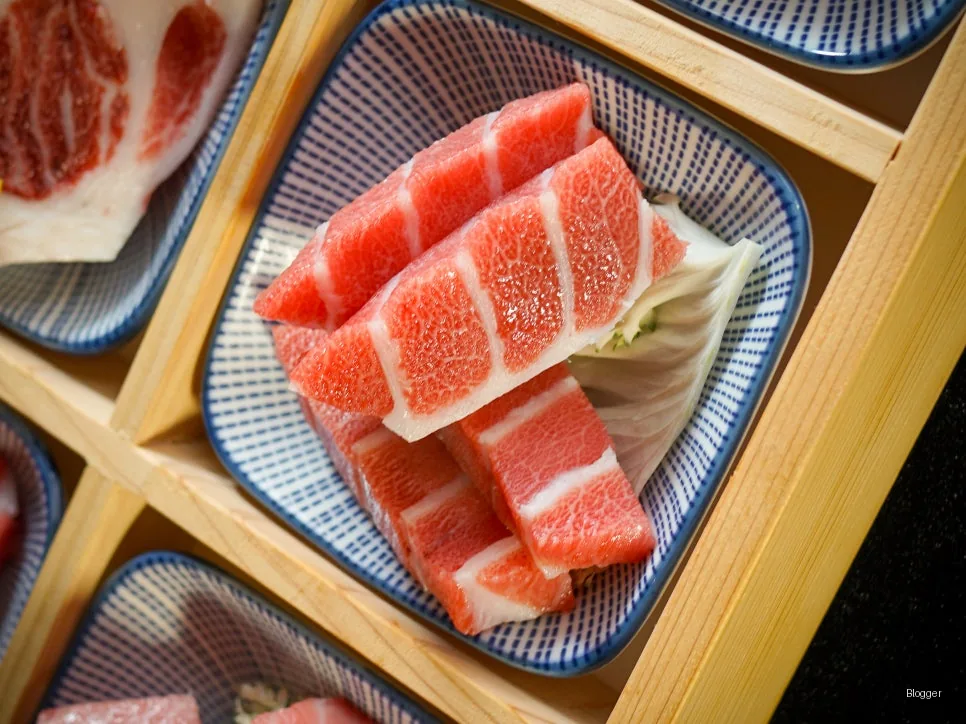
-
The color must be alive.
-
The marbling must be exquisite.
-
The surface must be immaculate.
-
The form of the cut must be sharp.
Therefore, tuna is a dish that must be visually convincing before it is tasted.
Why Goldtuna Obsesses Over Color and Form
Before you marvel at the taste, you must be won over by the sight. When I prepare tuna, I don't just think about the flavor profile. I look at:
-
How each piece will appear to the guest.
-
Whether the color has fully bloomed.
-
Whether the moisture has been perfectly managed.
-
Whether the structural form is held firm.
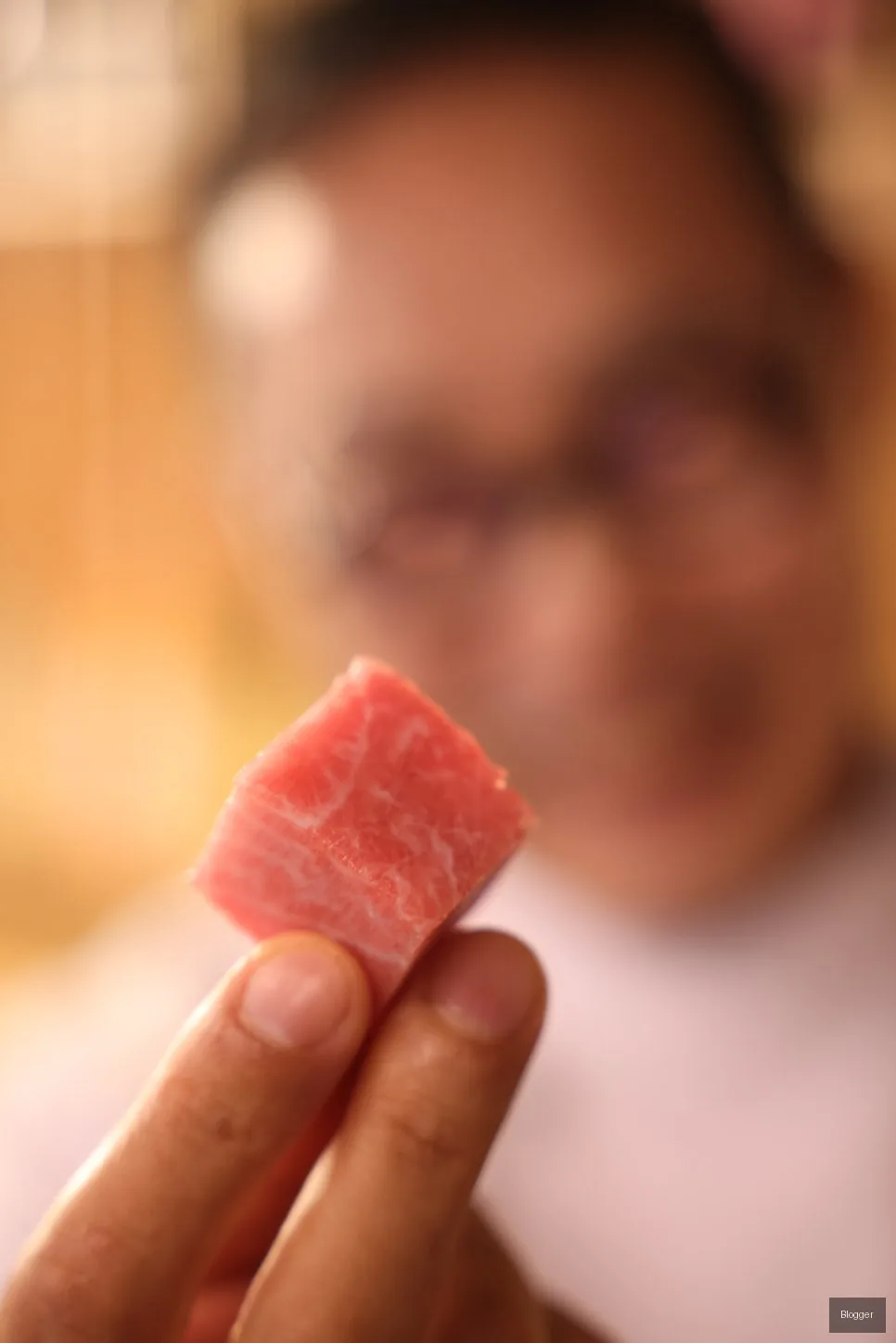
Goldtuna Signature Cut: Cube-Slicing
A piece of sashimi at Goldtuna is more than just raw fish; it is an invitation for trust, earned through the eyes.
Color Speaks, Marbling Persuades, Form Completes, Taste Moves.
Tuna is not a food defined by heavy seasoning or artificial stimulation. It is a food that speaks through its color, persuades with its marbling, and is perfected by its form.
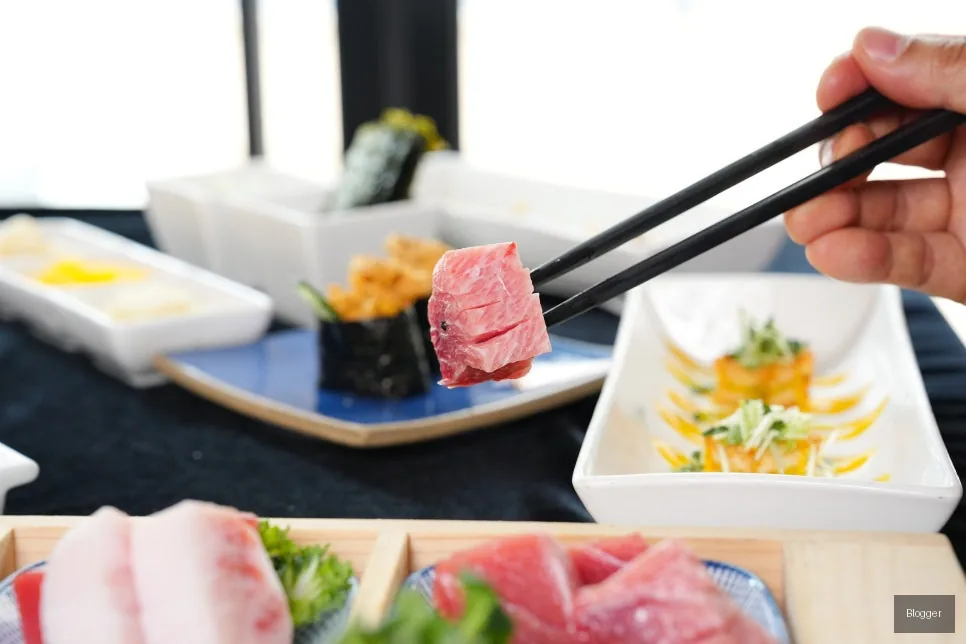
Southern Bluefin Tuna
That is why great tuna requires:
-
Excellent raw material.
-
Vibrant color blooming.
-
Perfectly managed surface moisture.
-
Solid, deliberate slicing.
The reason Goldtuna emphasizes the thawing process, moisture control, and thick cuts boils down to one thing: making the experience clearer and more luxurious for you. Tuna isn't just eaten with the tongue; it is savored with the eyes first, and then admired by the palate.
Menu Guide, Course Sequence & Store Information
-
Lunch: Lunch B Course (35,000 KRW), Lunch A Course (45,000 KRW), Lunch Special (60,000 KRW)
-
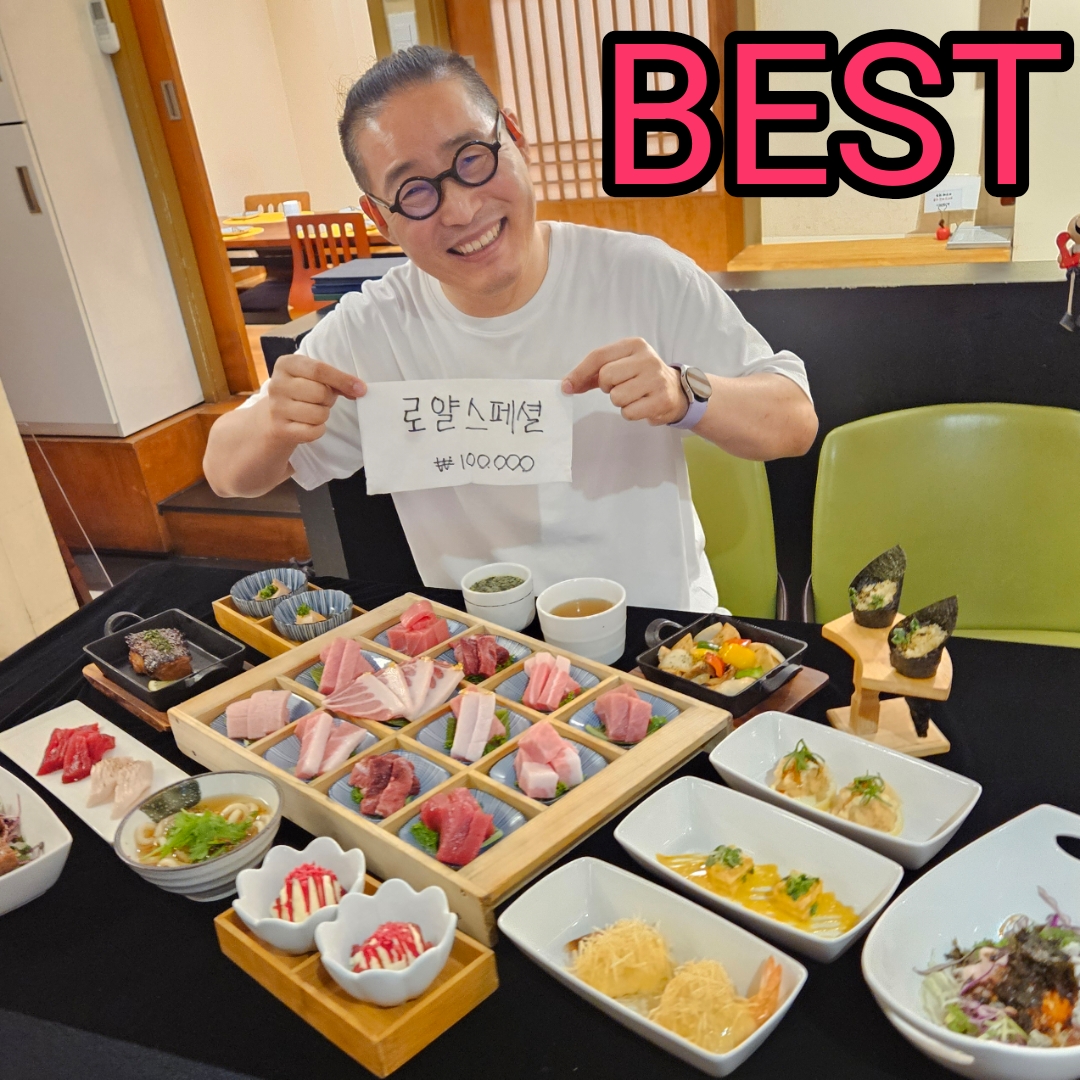
Dinner: VIP Special (80,000 KRW), Royal Special (100,000 KRW), Omakase Special (130,000 KRW)
|
① Tuna Porridge → ② Tuna Salad → ③ Fish Ball → ④ Grilled Mushrooms → ⑤ Main Tuna Sashimi → ⑥ 2-Piece Sushi Set → ⑦ Extra Tuna Service → ⑧ Ankimo (Monkfish Liver) → ⑨ Grilled Mero (Patagonian Toothfish) → ⑩ Beef Tteokgalbi (Grilled Short Rib Patties) → ⑪ Tuna Karaage (Fried Tuna) → ⑫ Fried Cream Shrimp → ⑬ Udon → ⑭ Maki → ⑮ Ice Cream |
◆ Store Concept: Premium Tuna Specialty (Korean-Chinese-Japanese Fusion 15-Course Omakase)
◆ Menu Features: Using Bluefin Tuna No.9 (250kg+ class) / Signature Cube Slicing / Custom Hinoki Wood Trays
◆ Recommended For: Bangi-dong dates, Garosu-gil blind dates, Private room family gatherings, Wedding invitation dinners, Corporate dinners
◆ Customer Trust: Over 45,000 accumulated reservations / 80% return rate / Naver Rating: Bangi 4.7, Sinsa 4.9
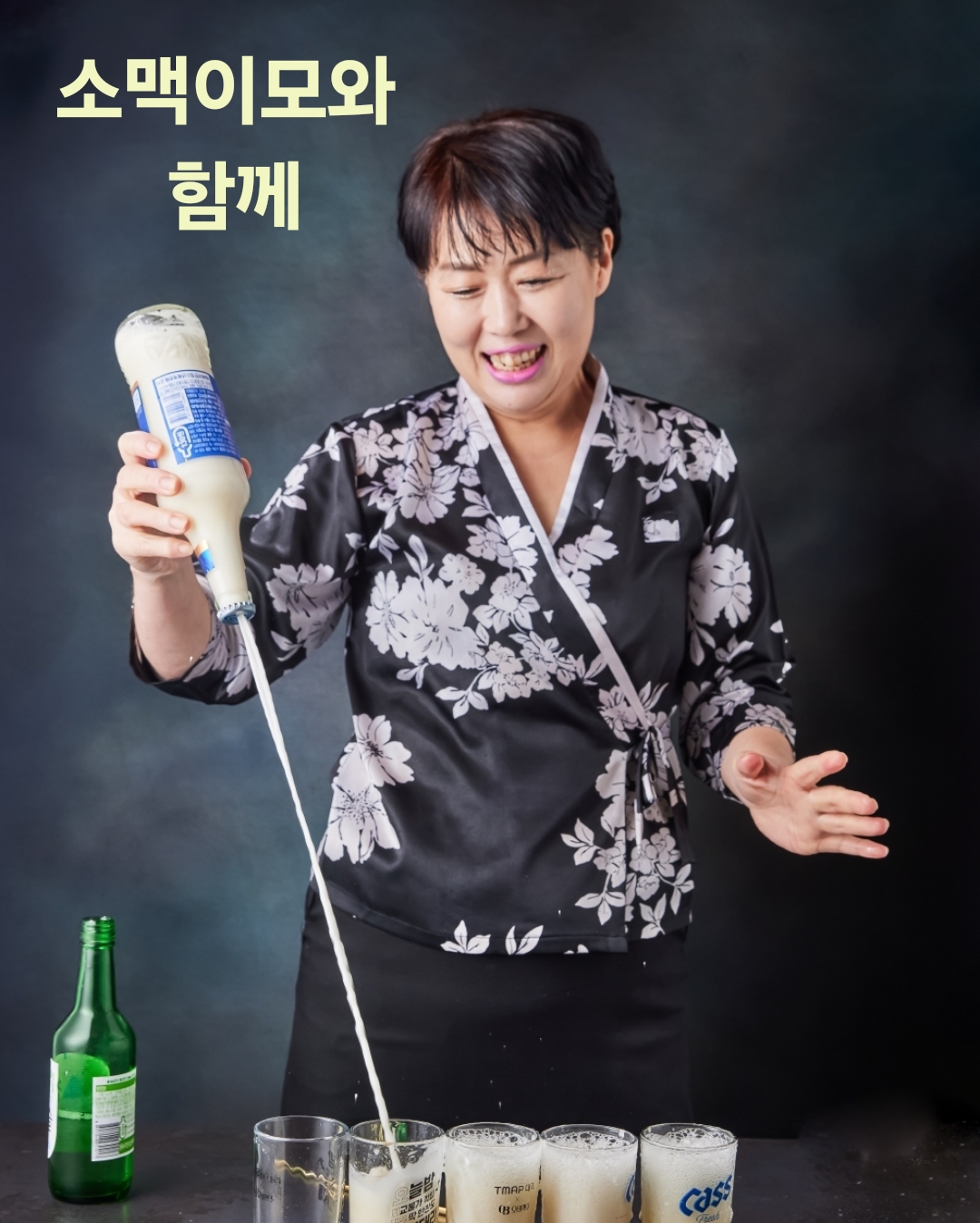
◆ Special Services: "Tuna Steak" substitute for those who don't eat raw fish / Somac-Auntie Jumakase Service / Wedding Celebration Events (Bangi Branch) / Lettering Service (Sinsa Branch)
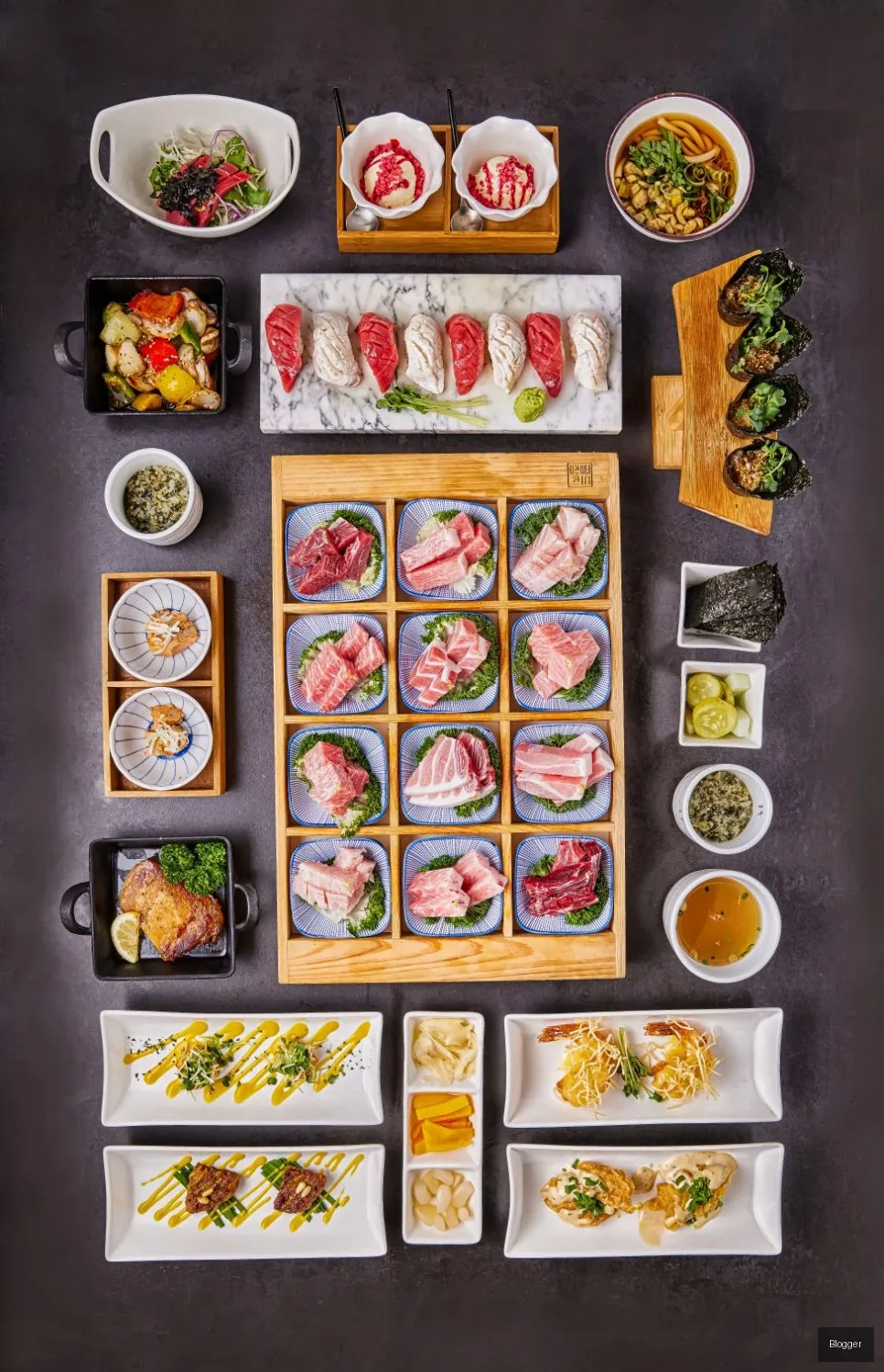
The Goldtuna 15-Course Table Presentation
Reservations & Contact Information
Goldtuna Bangi Branch: 109-11 Bangi-dong, Songpa-gu, Seoul
-
Reservation: 0507-1420-7747
-
Directions: Songpanaru Station (4 min), Jamsil Station (10 min)
-
Valet Parking: Managed at Nolboo Sulfur Duck Jamsil booth
Goldtuna Sinsa Branch: 532-2 Sinsa-dong, Gangnam-gu, Seoul
-
Reservation: 0507-1394-0484
-
Directions: Sinsa Station, Apgujeong Station (10 min walk)
-
Valet Parking: Call us upon arrival and we will assist with parking.
When you search for Goldtuna on Naver, you will see exactly why our guests speak first of the incredible color and form of every piece. We invite you to experience the visual and culinary art of tuna omakase in Seoul.

.jpg)

댓글
댓글 쓰기