Bangyi-dong Group Dining: Hanwoo Beef vs. Fresh Tuna Comparison
When choosing a menu for a company dinner or a social gathering in Seoul, both Hanwoo (premium Korean beef) and tuna are high-end options. However, if you prioritize a setting where people can sit and talk for a long time, there is a significant difference in how these two meals are experienced.
Hanwoo requires grilling directly at the table, whereas a tuna omakase (chef's choice course) is served ready to eat. Ultimately, what matters most at a "hoesik" (Korean company dinner) isn't just the price or grade of the food, but how much the diners need to intervene with the food while eating.
For corporate dinners where conversation is key, you need to consider ‘how the food is eaten’ as much as ‘what you are eating.’
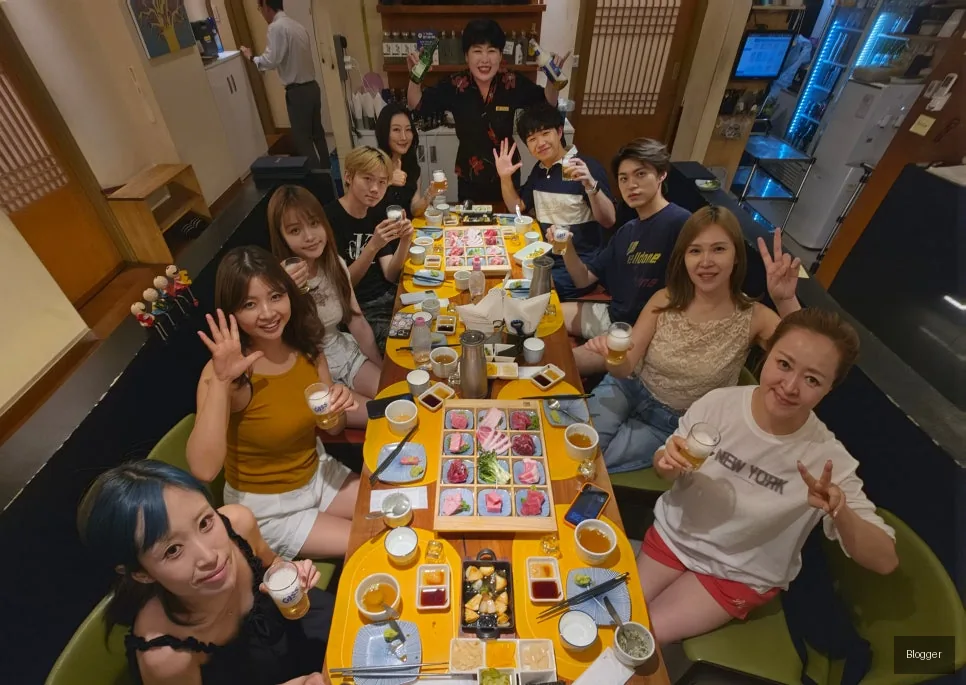
A group of tourists from China dining at Goldtuna Bangi-dong branch in August 2026. With specialized tuna trays and various dishes served at the center, guests are free to raise their glasses and take photos without distraction.
Hanwoo BBQ: Someone is always stuck managing the grill
At a Korean BBQ restaurant, the meal doesn't end when the meat arrives. Someone must place it on the grill, flip it, check the doneness, and move it so it doesn't burn.
In a group setting, someone naturally takes on the role of the "grill master." If you order more meat, the process starts all over again. You also have to deal with changing the grill plates or adjusting the fire. It’s a dining style where people revolve around the fire and the meat.
Of course, the act of grilling together can be part of the fun. If it's a casual gathering focused on meat and drinks, this can be an advantage.
However, for meetings intended to continue a post-conference discussion or listen deeply to one another, the constant distraction of food preparation is a factor that shouldn't be ignored.
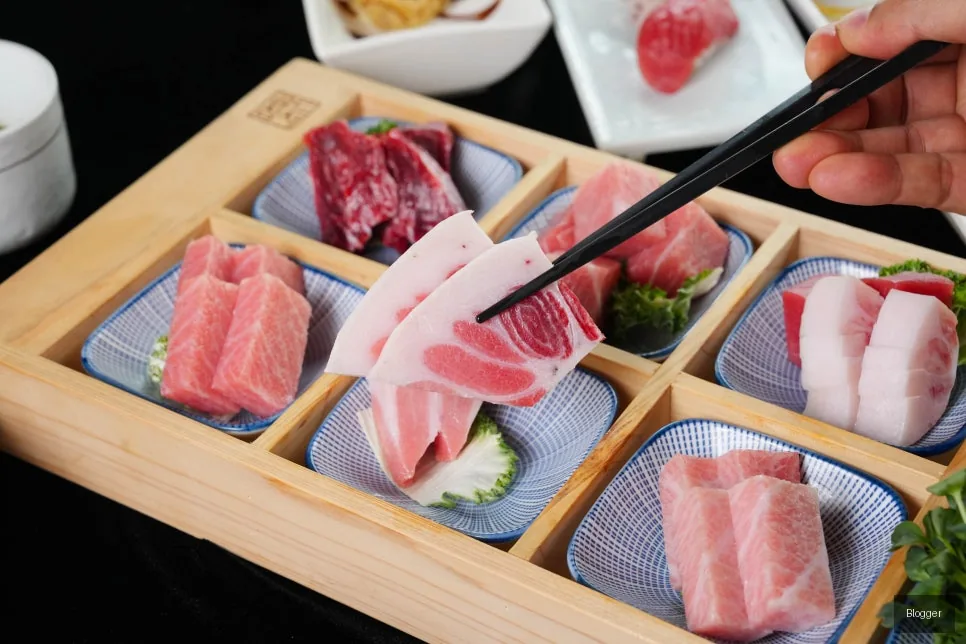
Bluefin Tuna Belly (Otoro) - Goldtuna
Tuna Omakase: Zero cooking required for the guests
The dining experience at a tuna specialty restaurant is completely different.
The tuna is served at the table after professional thawing and slicing. Other dishes like grilled items and tempura are prepared in the kitchen and served hot. There is no need for guests to manage a grill or flip any food.
When I explain Goldtuna's hoesik experience, I often say:
“All you need to bring is your mouth.”
It might sound like an exaggeration, but strictly in terms of dining logistics, it's accurate. The guest's only job is to eat the food provided and talk to the people they came with.
Goldtuna's 15-course meal isn't just about eating tuna. It includes sashimi, sushi, grilled fish, tempura, Chinese-style cuisine, and a final meal. The essence of this course is the diversity of dishes you can experience in one seat, rather than just the order of service.
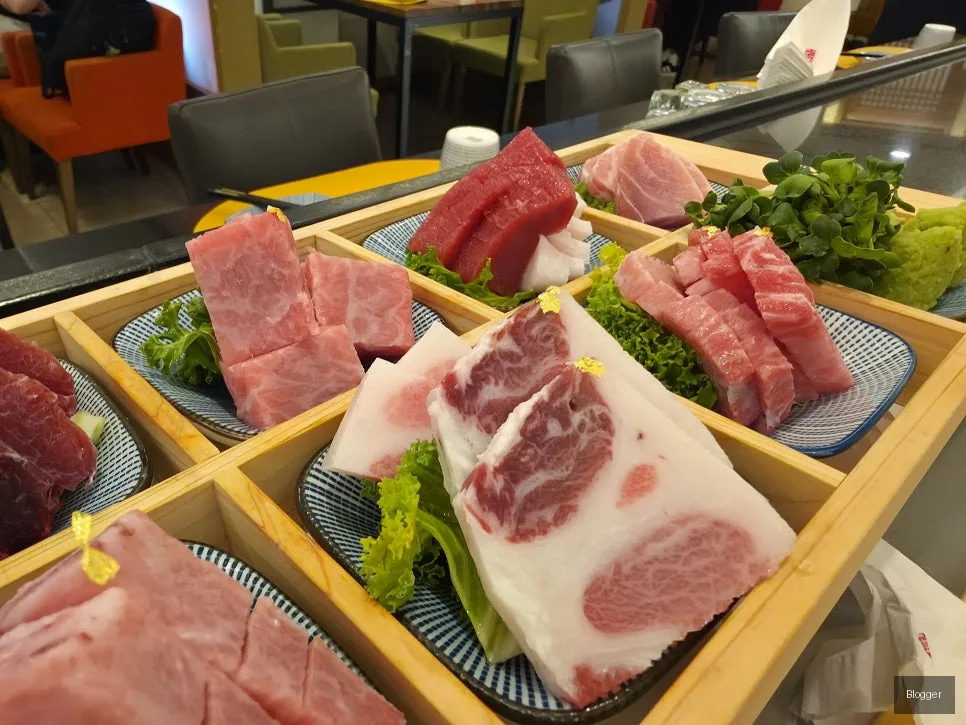
Goldtuna's Signature Hinoki Wood Tray
The food is great, but the flow of the meal is more important
Dinner at Goldtuna can often last for about three hours.
During this time, people aren't constantly eating. They eat, they talk, they drink, and then they return to the food.
This creates a different scene compared to Hanwoo. At a BBQ spot, the atmosphere naturally winds down once the ordered meat is finished and the grill cools off. In contrast, a course meal keeps the flow of the dinner alive for much longer.
If a hoesik isn't just for filling stomachs but is a place where several people need to communicate sufficiently, this difference is worth considering.
The food itself doesn't create the conversation. However, you can choose a meal that doesn't get in the way of it.
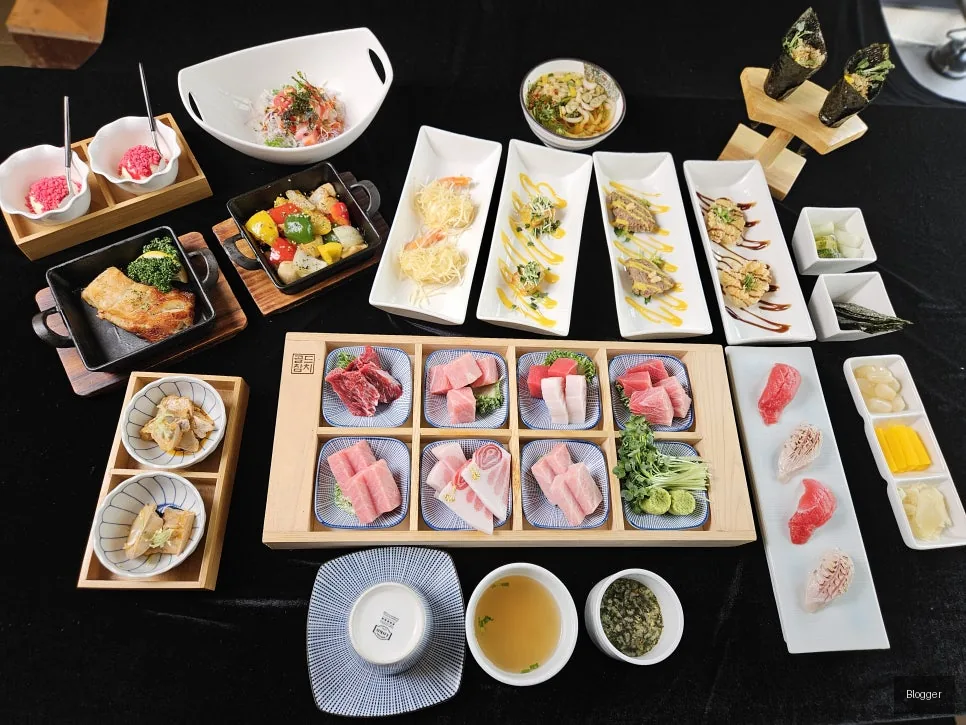
A full table setting for two.
It’s easier to calculate the dining budget in advance
For those organizing a company dinner, cost is a major factor.
The final bill for Hanwoo can fluctuate wildly depending on the cuts, the amount ordered, and additional servings. Conversely, with a course meal, the base budget is easy to calculate once you've set the number of people and the course level.
Goldtuna has fixed prices per course. Since additional services (service tuna) are provided after the set composition, there is significantly less pressure to keep recalculating the order during the meal.
Therefore, when planning for a large group, considering whether the budget per person can be finalized beforehand is an excellent criterion for choosing a venue.
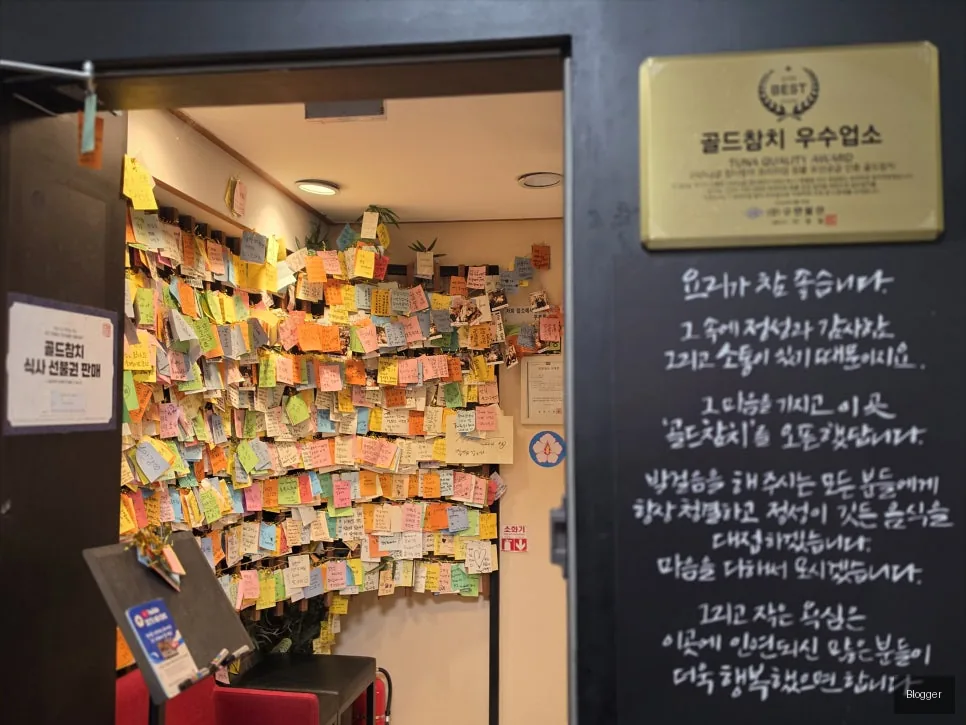
Handwritten notes from customers are posted at the entrance.
A recent case study of 9 guests
In early August 2026, a group of tourists from China visited Goldtuna Bangi-dong.
The photo shows them sitting along a long table. In the center sits the tuna tray, and some guests are raising beer glasses. In the background, "Somaek Imo" (our famous Somaek auntie) poses with a bottle for a photo.
Goldtuna has several viral SNS videos of "Somaek Imo" reaching over 200 million views, leading to an influx of international visitors. But the nationality of these tourists isn't the point of this story.
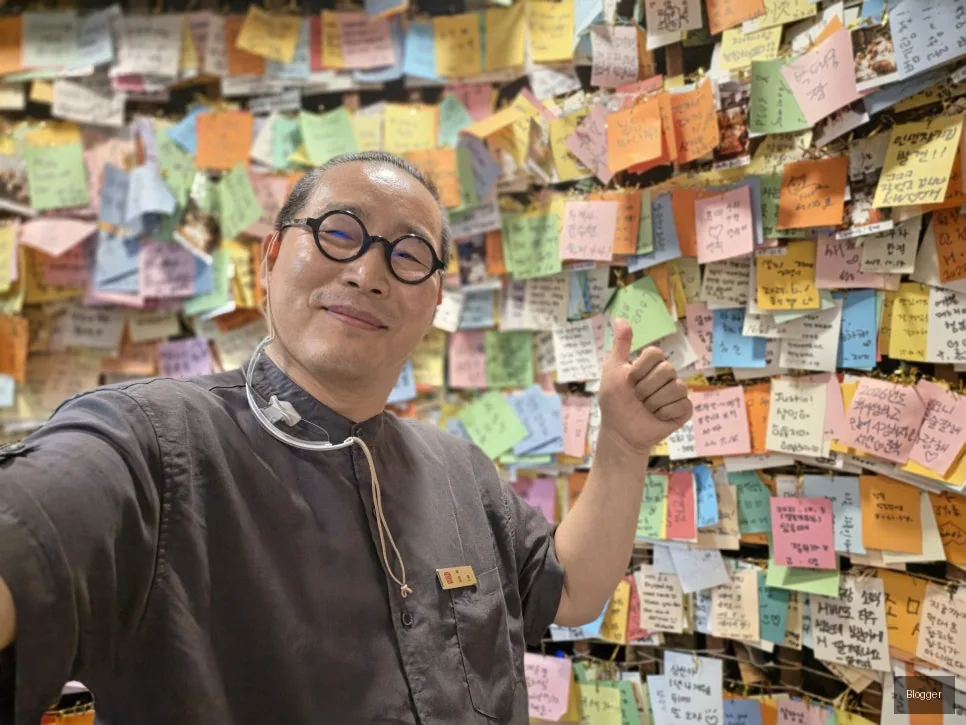
"Tuna Uncle" with reviews written by happy customers.
Is Tuna Omakase always better than Hanwoo?
There is no single answer that applies to every dinner.
If the process of grilling meat together is important for the group's dynamic, Hanwoo is the right choice. The same applies to short, casual gatherings for meat and alcohol.
Conversely, for dinners where you want to talk for a long time without worrying about cooking, where the budget needs to be fixed per head, or where you want to enjoy a variety of different dishes, a tuna course meal is an excellent comparison.
When deciding on a location, don't just look at the type of food. Check one more thing:
“How much hands-on effort does this food require while we talk?”
Asking this question makes the difference between Hanwoo and Tuna much clearer.
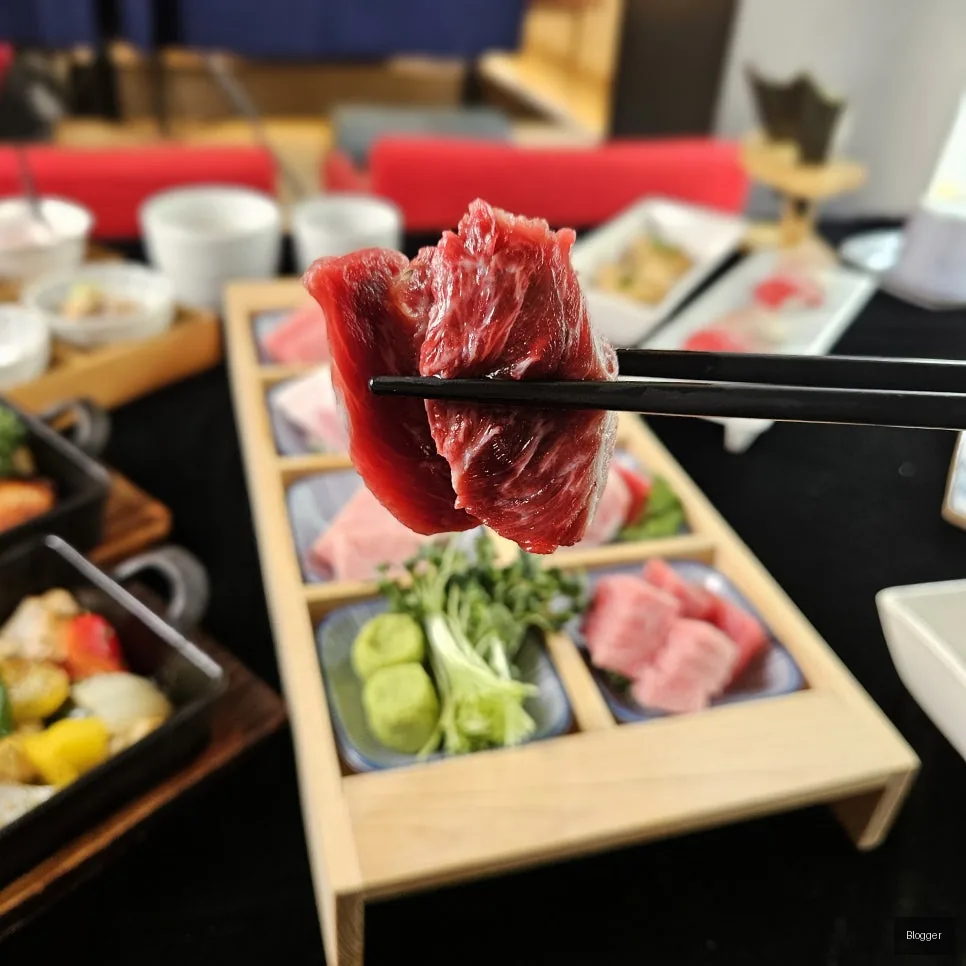
Bluefin Tuna Wing Meat (Kama-toro)
A word from "Tuna Uncle"
I love Hanwoo, too. So, I don't intend to claim that one tastes better than the other.
However, if I have to meet someone and talk for three hours, I prefer food that I don't have to grill myself. I'd rather focus on the person I'm with than the meat on the grill.
Real-world cases worth reading:
A Promotion Celebration for 24 Guests Built on Trust: Group Booking at Goldtuna Bangi-dong
This is a case where a long dinner for company officials at our Bangi branch led to an even larger group reservation. You can see how course meals and group dining are actually managed for corporate events.
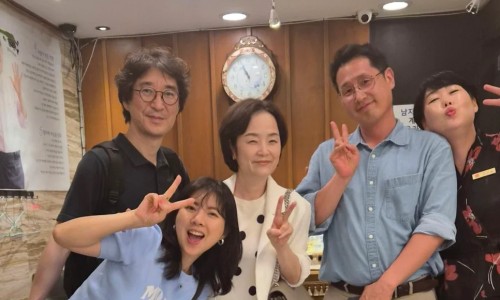
Proof that it's easy to converse:
Social Gathering Review: Enjoying comfortable conversation at Goldtuna Bangi-dong
Goldtuna operates in Bangi-dong and Sinsa-dong.
While the location and ambiance of each branch differ, our standards for tuna preparation, basic course compositions, and customer service principles remain identical.
Whether you dine at the Bangi branch or the Sinsa branch, you can enjoy a diverse course menu featuring tuna, sushi, grilled fish, tempura, Chinese-style dishes, full meals, and dessert. We apply the same rigorous standards for selecting tuna raw materials, thawing, and slicing at both locations.
Therefore, when choosing a venue for your hoesik, you can make your decision based on which area is more convenient for your group and which branch better fits your desired headcount and space requirements.
If you are meeting in Bangi-dong, choose the Bangi branch; if you are gathering in Gangnam or Sinsa-dong, choose the Sinsa branch. The quality of food and service at Goldtuna remains consistent across both.
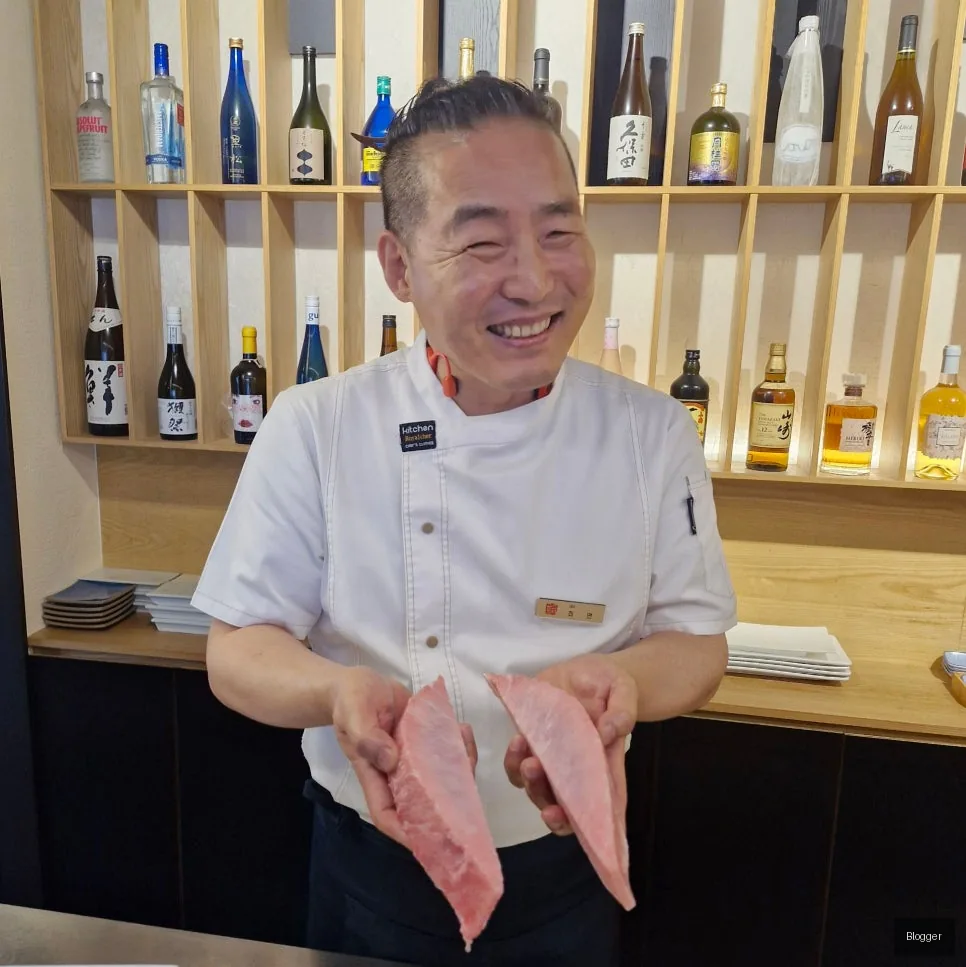
Bluefin Tuna Collar Meat (Gamatoro)

.jpg)

댓글
댓글 쓰기