Bluefin Tuna vs. Hanwoo Beef: Price Comparison by Cut
Written and Reviewed by: Uncle Tuna | Goldtuna
Everyone knows that Hanwoo (premium Korean beef) is an expensive ingredient. But how does premium Bluefin Tuna compare?
While discussing raw material costs with the team at Goldtuna, we decided to run a direct comparison with Hanwoo. When looking at the price per kilogram, we found that prime Bluefin Tuna belly cuts are priced similarly to Hanwoo sirloin and strip-loin. However, for the prized gama-sal (collar meat), the calculation becomes even more interesting.
To be transparent, we must define our criteria: The tuna prices mentioned are Goldtuna's actual wholesale purchase prices, while the Hanwoo prices are the average Grade 1 factory-release prices published by the Korea Meat Trade Association (KMTA), not retail consumer prices.
While the trade stages aren't identical, comparing raw material costs is more accurate than using supermarket retail prices. Currently, Grade 1 Hanwoo is priced at: Tenderloin 93,250 KRW/kg, Strip-loin 70,575 KRW/kg, and Sirloin 61,575 KRW/kg.
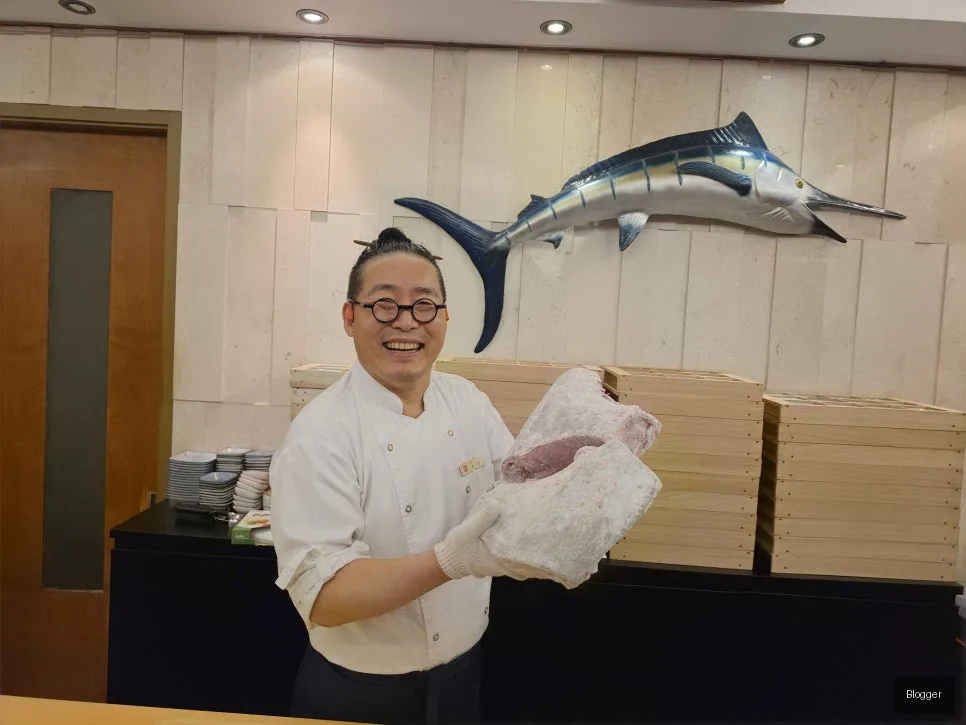
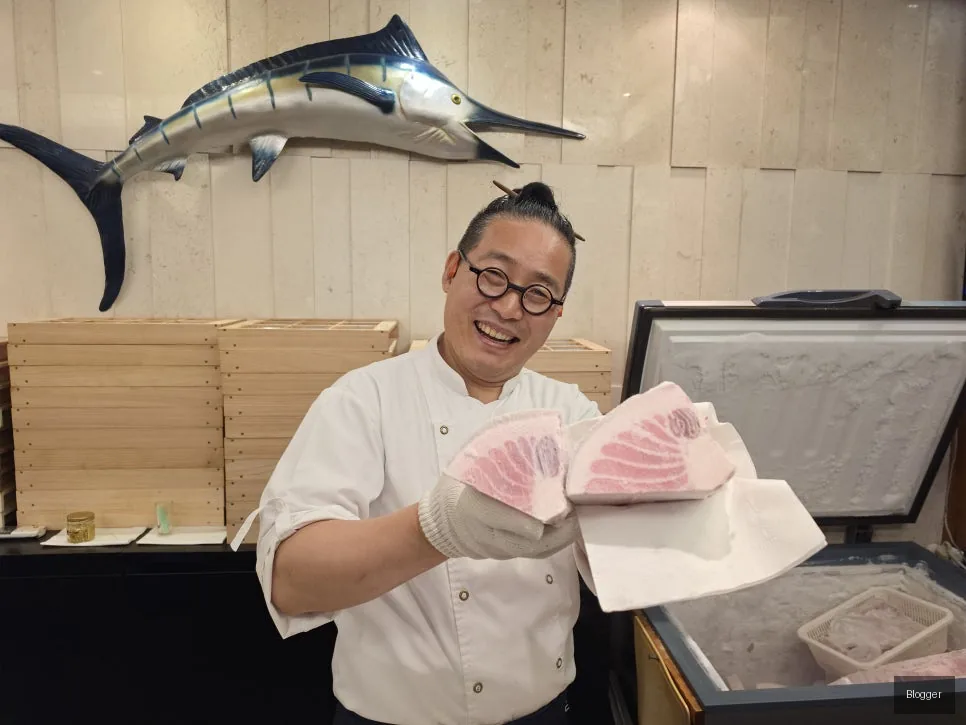
The raw Bluefin Tuna collar (Gama) used at Goldtuna. The prized collar meat is separated from between these bones.
1. Why Bluefin Tuna Gama-sal Pricing is Misleading
Goldtuna's purchase price for the raw collar section shown in the photo is approximately 40,000 KRW/kg.
At first glance, 40,000 KRW per kg seems cheaper than other Bluefin Tuna belly cuts. However, not all of this raw material can be served as sashimi.
The collar contains large, heavy bones. Based on Goldtuna's precise preparation standards, the actual yield of usable meat is only about 30%. Depending on the condition of the fish, this yield can fluctuate by about 5%.
Calculation based on a 30% yield:
Raw collar material (40,000 KRW/kg) ÷ 30% Yield
= Effective Cost of Usable Meat: Approx. 130,000 KRW/kg
This means we must purchase roughly 3.3kg of raw collar just to obtain 1kg of edible gama-sal. This calculation doesn't even include labor costs for the intricate trimming required.
Therefore, one must distinguish between the raw purchase price of 40k KRW/kg and the true operational cost of over 130k KRW/kg for the served meat.
2. Cost Comparison: Tuna vs. Premium Hanwoo Tenderloin
The current average factory-release prices for Grade 1 Hanwoo are: Tenderloin (93,250 KRW), Strip-loin (70,575 KRW), and Sirloin (61,575 KRW) per kg.
When placed side-by-side with Goldtuna's raw material costs, the premium nature of Bluefin Tuna becomes clear:
| Ingredient | Price per kg (KRW) | Data Basis |
| Bluefin Tuna Gama-sal (Collar) | 130,000 | Goldtuna Purchase Price |
| Grade 1 Hanwoo Tenderloin | 93,250 | KMTA Factory Avg. |
| Bluefin Tuna Gama-toro (Collar Belly) | 78,000 | Goldtuna Purchase Price |
| Bluefin Tuna No. 1 Toro (Top Belly) | 76,000 | Goldtuna Purchase Price |
| Grade 1 Hanwoo Strip-loin | 70,575 | KMTA Factory Avg. |
| Grade 1 Hanwoo Sirloin | 61,575 | KMTA Factory Avg. |
| Bluefin Tuna Akami (Lean Red Meat) | 38,000 | Goldtuna Purchase Price |
| Southern Bluefin Tuna Belly | 34,000 | Goldtuna Purchase Price |
※ Tuna prices are based on Goldtuna's August 2026 purchase records. Prices may vary based on exchange rates and supply fluctuations. Hanwoo prices refer to Grade 1 castrated beef factory averages from KMTA.
What stands out in this table is that Top-tier Bluefin Toro (No. 1 and No. 2) is priced similarly to premium Hanwoo strip-loin.
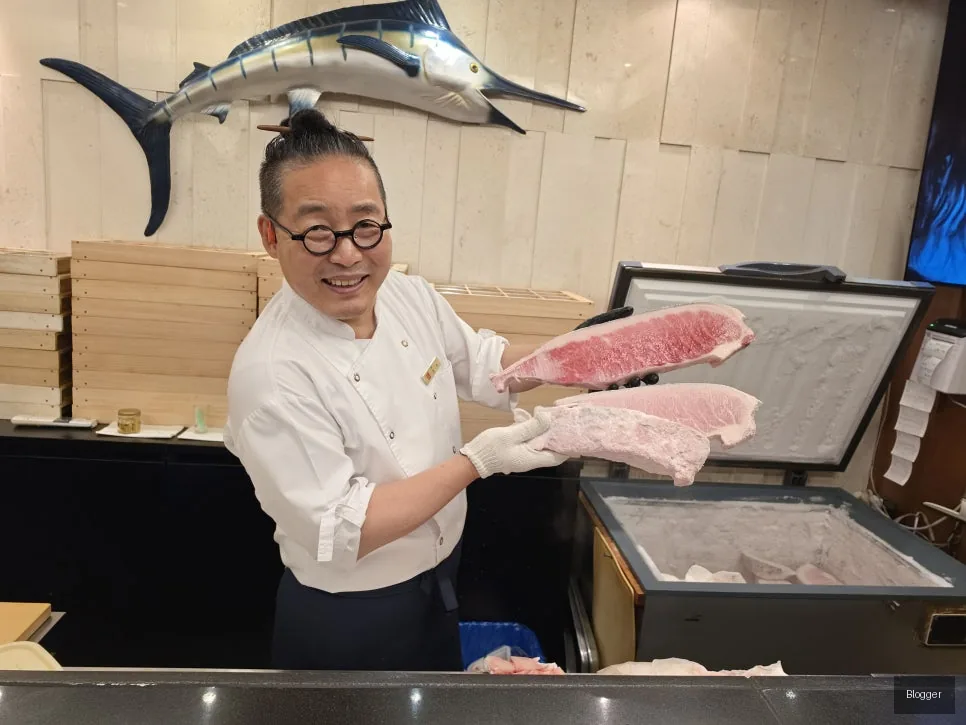
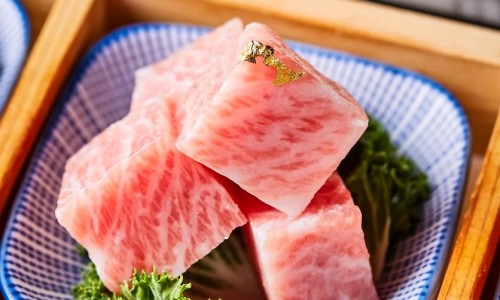
Top-grade Bluefin Tuna No. 1 Toro (Belly) used at Goldtuna.
3. Understanding Tuna Quality: It’s All About the Cut
When buying beef, we don't judge the price by the word "Hanwoo" alone. We look at whether it's tenderloin, sirloin, or strip-loin. For example, Grade 1 tenderloin is 93,250 KRW/kg, while round steak (udun) is only 29,000 KRW/kg.
Tuna is the same. First, the species matters (Bluefin vs. Southern Bluefin vs. Bigeye). Then, within Bluefin Tuna, the price varies wildly between Gama-sal, Gama-toro, No. 1 Toro, Navel Belly, and Akami.
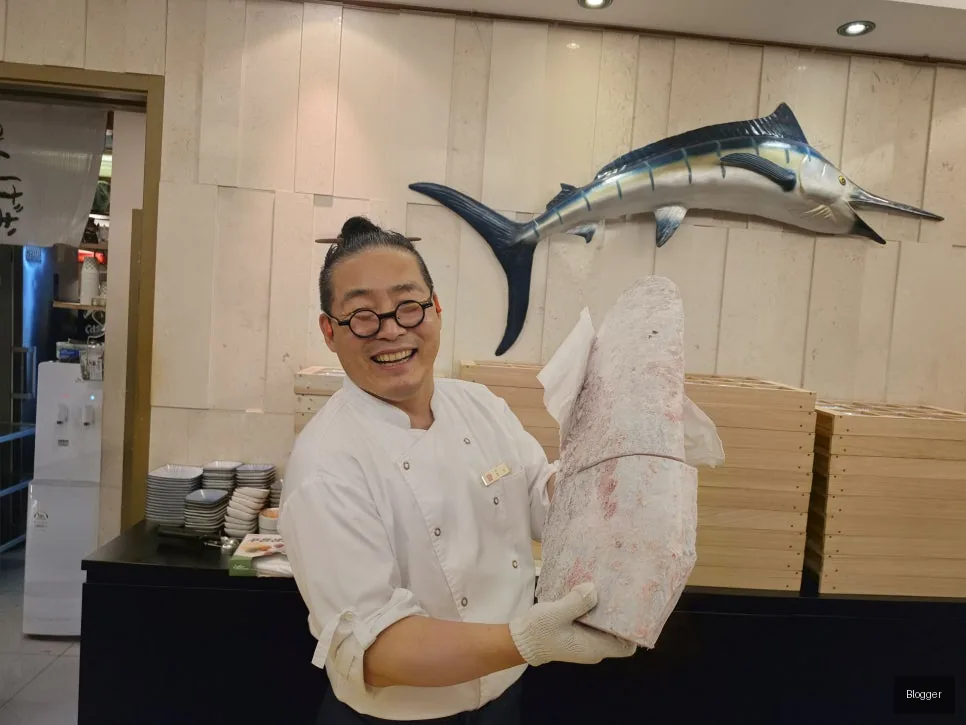
Southern Bluefin Tuna belly meat used at Goldtuna.
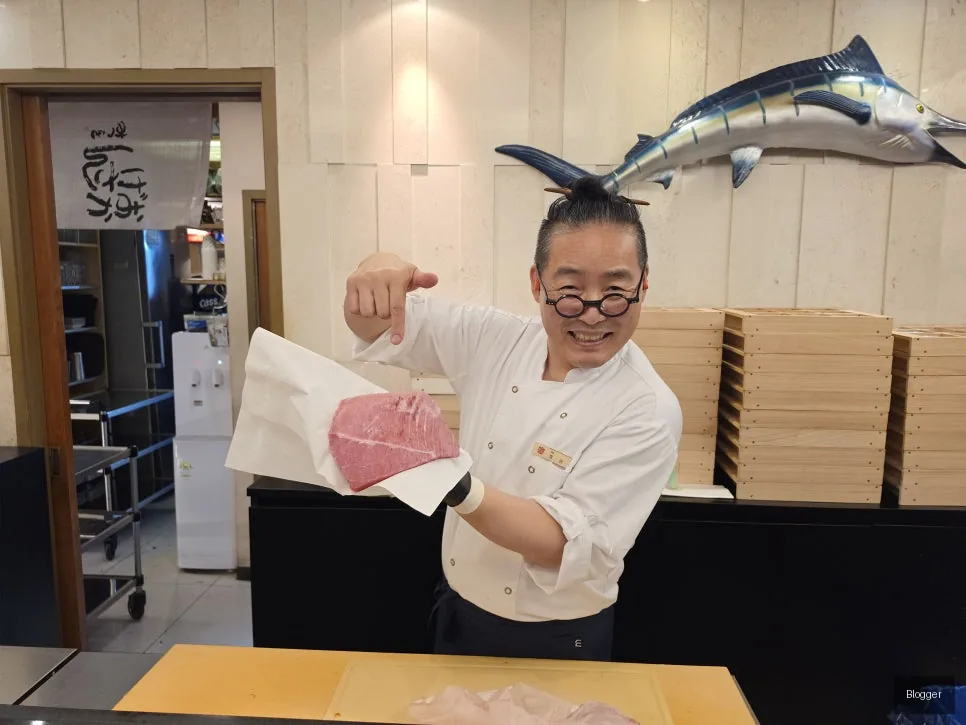
Bigeye Tuna front portion used at Goldtuna.
The luxurious Navel Belly (Sunazuri) of a Bluefin Tuna.
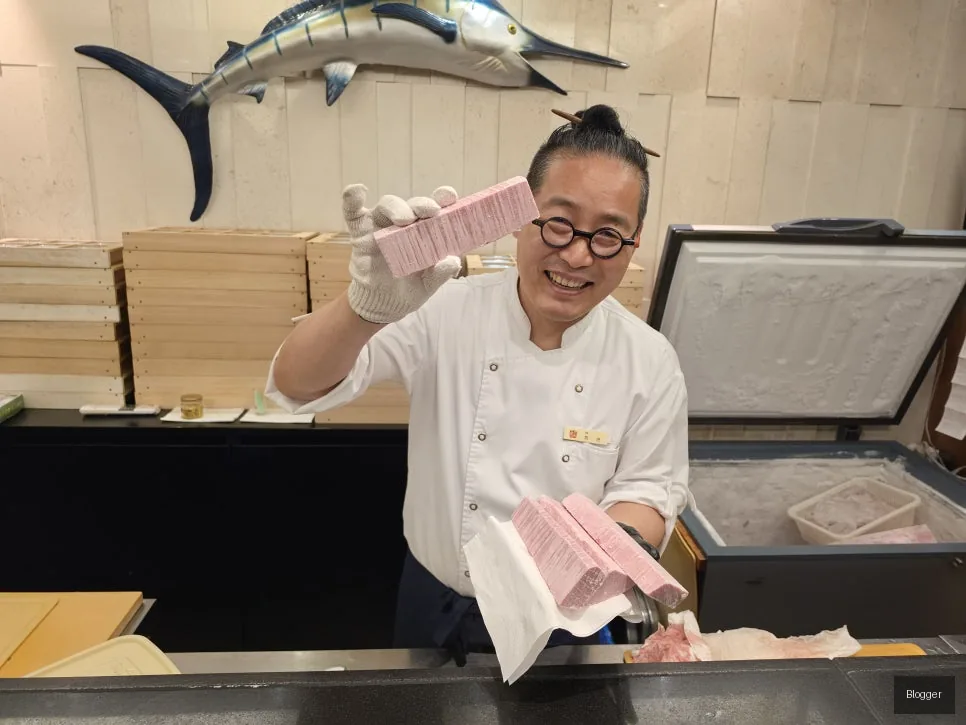
Bluefin Tuna Lean Red Meat, known as Akami.
Simply saying a restaurant "uses Bluefin Tuna" isn't enough to judge the quality. You must look at the species, the size of the whole fish, and specifically which cuts are being served.
4. Why Gama-sal is Reserved for Our Omakase Special
At Goldtuna, we don't include Gama-sal in every course. This exclusive cut is reserved for our Omakase Special (chef's choice course).
While the raw material cost is 40,000 KRW/kg, the 30% yield means the actual cost for the meat on your plate is approximately 133,000 KRW/kg.
The amount obtained from a single fish is also extremely limited. Therefore, course price differences aren't just about the number of dishes; the specific cuts and species provided directly dictate the value of the experience.
A Note from Uncle Tuna
Even our staff were surprised when we laid out these numbers next to Hanwoo prices. Tuna and beef seem like worlds apart, but per kilogram, prime Bluefin Tuna belly cuts exist in the same price tier as premium Hanwoo.
True value is found by calculating the yield of edible meat, not the price of the raw material including bones.
While the precise math yields 133,000 KRW/kg, I usually refer to it as "the 130k KRW range" in our kitchen. Since yield fluctuates between 25-35% depending on the specific fish, this range is a more realistic reflection of the craftsmanship involved.
FAQ: Why Do Tuna Course Prices Vary?
Q: Is the price difference just about the quantity?
A: No. The primary factor is the species and the specific cuts (e.g., Akami vs. No. 1 Toro). At Goldtuna, we offer courses at 80k, 100k, and 130k KRW. For a detailed breakdown of how these cuts differ, check out our guide: "Tuna Course 80k vs. 130k: The Decisive Difference in Cuts and Composition."

.jpg)

댓글
댓글 쓰기