From Two Failed Shops to Mind Capital: A New Book Journey
Yesterday, I finally sent the manuscript for my upcoming book, "How Much Is Your Mind Capital?" to the publisher.
While the publication method and final details are still being finalized, reaching the stage of awaiting results after submitting the draft is a significant milestone. In preparing this book, there is one specific term I feel I must explain first.
That term is ‘Mind Capital.’
We are all familiar with economic capital, human capital, and social capital. But is there another type of asset—one that is invisible like money or skills, yet accumulates over time and provides strength when you need it most?
The Mind Capital I discuss in my book begins with this very question.
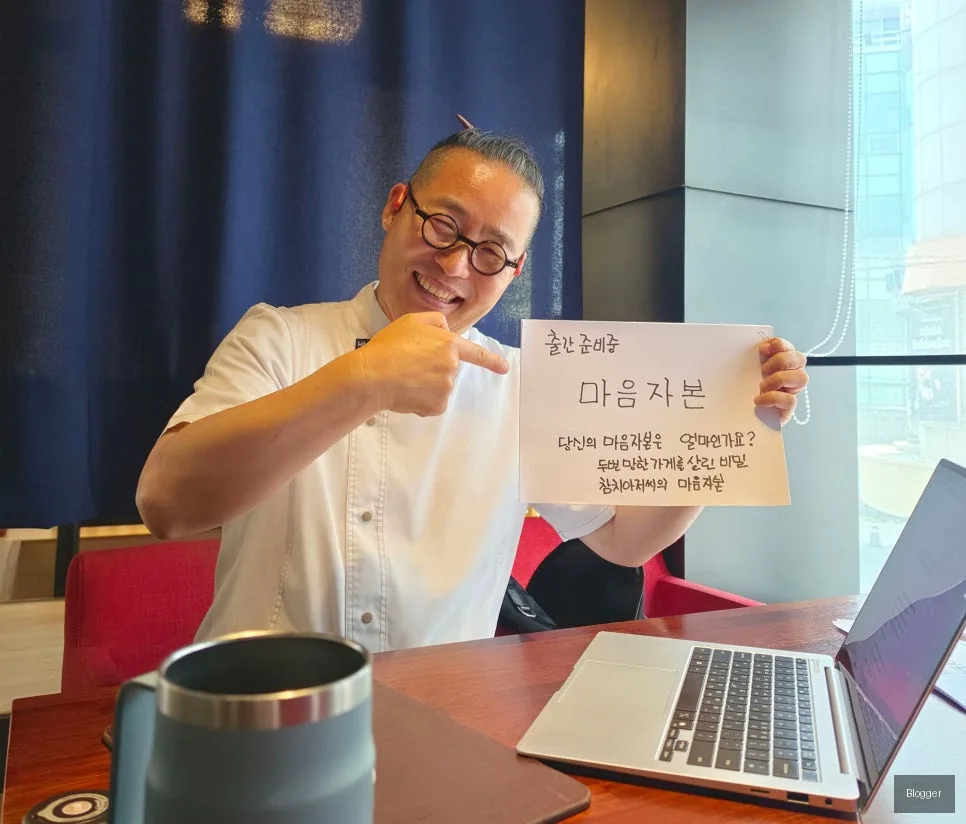
"Tuna Uncle" introducing his book concept 'Mind Capital.' How much is your mind capital?
Mind Capital is an invisible asset that accumulates
through repeated attitudes toward people, work, and relationships.
It protects you during difficult moments
and gives you the power to move forward again.
Why Call It ‘Capital’ and Not Just ‘Mindset’?
Simply having a good intention once is different from building Mind Capital. I use the word "capital" because it accumulates over time.
Remembering a customer's name once is a small thing. Choosing to apologize before making excuses when a mistake happens is also a small act in that moment. Admitting what you don't know, learning again, and showing up to do your job even on days when results are poor—none of these feel like grand achievements.
However, when these attitudes are repeated, the outcome changes completely.
The act of remembering a guest leads to deep relationships and trust. The habit of constant study sharpens your judgment. The attitude of opening your shop even after a failure becomes your power of recovery.
You cannot check your Mind Capital balance like a bank account today.
Instead, you realize what you have built only when things get difficult—by looking at what remains within you.
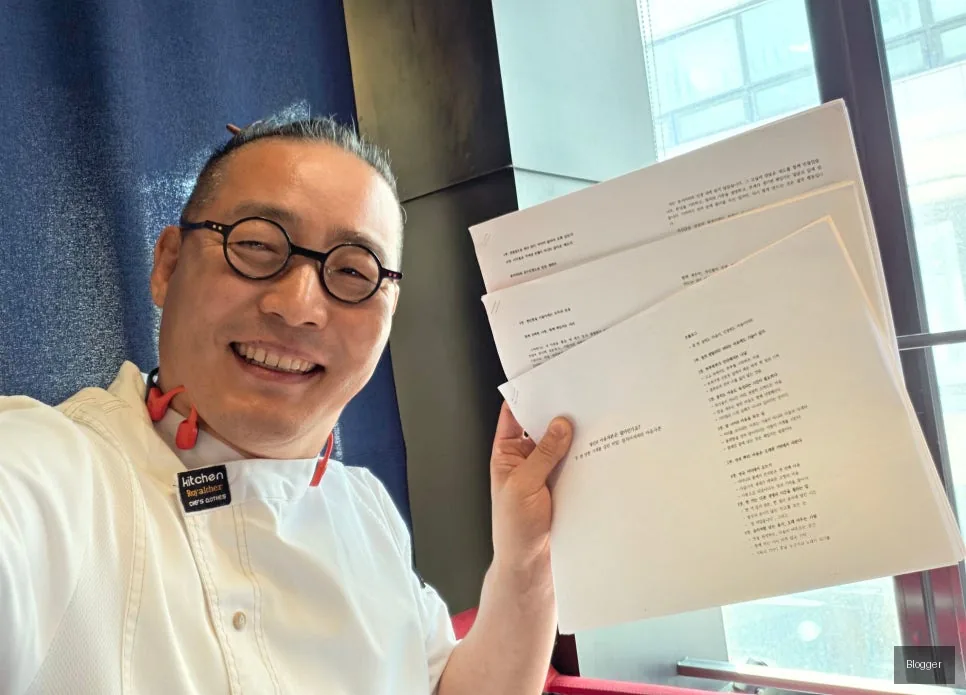
Holding the organized manuscript. It records experiences regarding business, relationships, failure, and growth under the theme of Mind Capital.
The Secret to Reviving a Failing Restaurant
In 2015, I took over the current Goldtuna Bangi-dong branch.
Before me, it had already been a tuna restaurant where the owner had changed twice due to poor business. I wasn't an expert in the restaurant industry at first. When guests didn't come, I personally went out with flyers to the Songpa-gu Office and Jamsil Station areas.
Wearing my white chef's uniform and hat, I promoted the restaurant. I even walked around Seokchon Lake to spread the word. At that time, I didn't have massive financial capital or superior culinary skills. All I had was:
Doing what I could do today.
Remembering a guest who visited once.
Learning what I didn't know.
Not avoiding problems when they arose.
Opening the doors again even on bad days.
I didn't call it Mind Capital back then. Looking back, I realized that these small choices accumulated to build the restaurant I have today.
Thus, *How Much Is Your Mind Capital?* is less a book about management techniques for a successful restaurant, and more a record of how one person repeatedly chose the right attitude in a difficult situation to rise again.
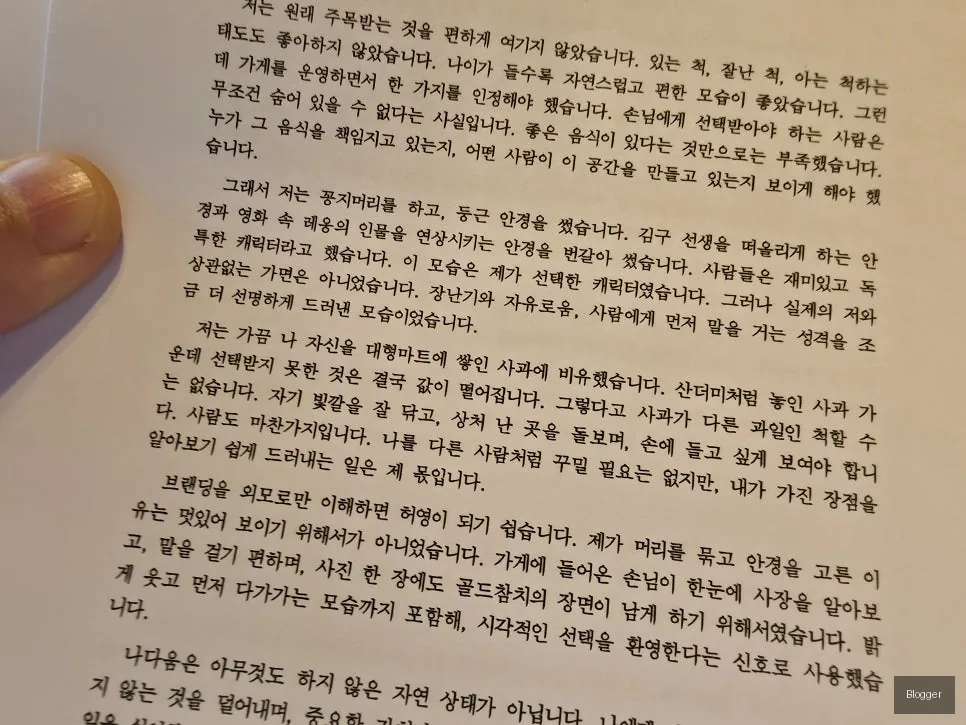
Part of the manuscript. It focuses on real-world experiences from running a business and dealing with people.
5 Pillars of Mind Capital
In organizing this book, I identified that Mind Capital consistently manifests in several key ways:
1. The Power of Resilience
The strength to keep doing today's work even if results don't appear immediately. Resilience doesn't mean just enduring while doing nothing; it's the attitude of continuing to do what you can while waiting for the results.
2. The Power of Building Relationships
Seeing a customer not just as "revenue," but as a person and remembering them. This applies to staff, family, and friends as well. Remembering a name, listening, and recognizing someone when they return—these small acts build relationships.
3. An Attitude of Responsibility
Mind Capital reveals itself more when things go wrong than when things go well. Do you admit a mistake? Or start with an excuse? Do you listen fully to someone expressing discomfort? Those choices either build or break trust.
4. The Habit of Learning and Growing
Admitting what you don't know is not a weakness. Leaving it that way is the real problem. Reading books, visiting other restaurants, and analyzing failures are all ways to build Mind Capital.
5. Unadorned Authenticity
Actions taken just for show are hard to sustain. Trust lasts when your daily habits align with the image you present to the world.
I am not saying these five points are a finished formula for success. They are simply the recurring patterns of how the mind works that I discovered while preparing this book.

Friends from Hong Kong traveling through Korea enjoyed a meal and a photo together at Goldtuna Sinsa branch.
Mind Capital at the Dining Table
Running Goldtuna allows me to meet guests from all over. Some come from nearby in Seoul, while others travel from across Korea with their families. We also see guests visiting from Hong Kong, Japan, China, and beyond during their Korean travels.
Though they come from different places for different reasons, the scenes at the dining table are similar. Families sit together, friends catch up, and couples or colleagues share a meal. They celebrate someone, or finally have conversations they've long postponed.
The longer I operate this restaurant, the more I realize that the value of food cannot be explained by taste alone. A guest spends their time and money for a single meal, making promises with loved ones to visit. As someone who prepares that food, I must not take that time lightly.
The attitude of cherishing a person's time and preparing everything so they can dine comfortably with their companions.
This small attitude is the form of Mind Capital I encounter most frequently in the restaurant.
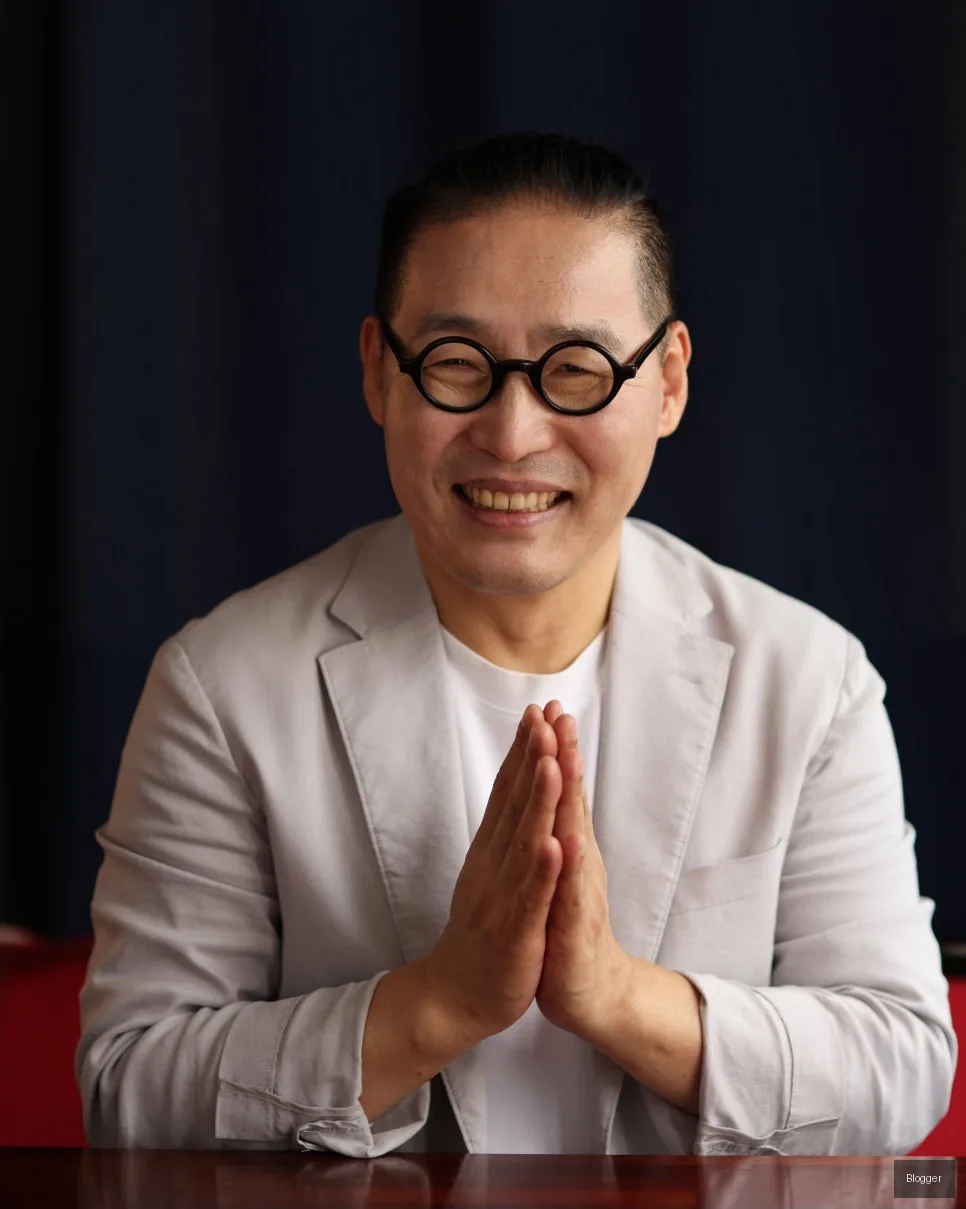
At some point, I developed the habit of putting my hands together in a respectful bow. I love this habit because it reflects gratitude and a serving heart.
What Kind of Book is *How Much Is Your Mind Capital?*
The subtitle of the book is "The Secret to Saving a Twice-Failed Shop: Tuna Uncle's Mind Capital."
It features many stories from the tuna restaurant—handing out flyers, defrosting tuna (otoro/akami), sharpening knives, remembering guests, working with staff, and handling claims. However, I didn't set out to write just a business manual for a tuna shop.
I wanted to expand how the mind works—lessons learned through business—to the broader realms of family, relationships, work, failure, and growth. Because Mind Capital is not just for business owners.
Everyone faces times when things don't go as planned. Relationships falter, or results don't match effort. What is the power that helps a person rise again? This book began with that question.

Preparing food directly in the Goldtuna kitchen. The book's main perspective is that Mind Capital begins with daily repeated work and attitudes toward people rather than grandiose ideas.
How Much Is Your Mind Capital?
There is no balance sheet for Mind Capital. You cannot calculate the exact amount. But you can ask yourself these questions:
What attitude do I choose daily?
How do I react when someone speaks of their discomfort?
Do I do what needs to be done even when results are invisible?
Do I remember those who helped me?
Do I have the strength to start over when I fall?
I believe the answers to these questions show the size of the Mind Capital you currently hold.
While preparing for publication, I plan to share various scenes from the book on this blog. It will start with business stories but will ultimately return to questions about ourselves.
How much is your Mind Capital?
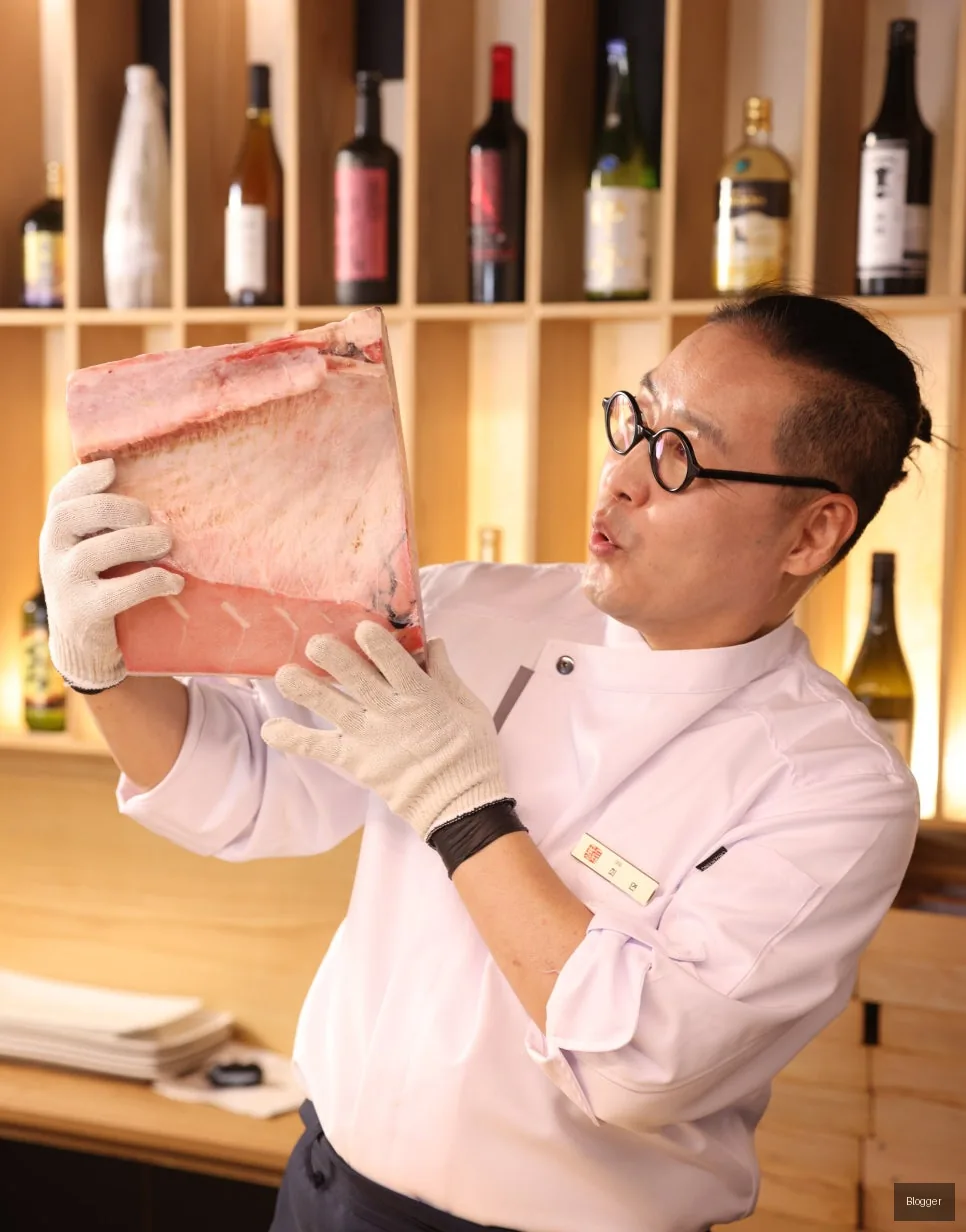
Inspecting raw tuna at Goldtuna. The standard for selecting and handling ingredients is also a core part of the professional attitude repeated over many years.


.jpg)

댓글
댓글 쓰기