Gold Tuna No.9: Ultimate Bluefin Tuna Size and Cut Guide
Written & Reviewed by: Mr. Tuna | Goldtuna
This article outlines the specific standards Goldtuna applies regarding the size and cuts of raw tuna when selecting our ingredients.
At Goldtuna, our primary criterion for exceptional cuisine is the selection of premium ingredients.
Even within the same species, the size of the tuna varies, and the price and texture change significantly depending on which specific cut is chosen from a single fish.
Therefore, Goldtuna does not define its standards simply by the species name, such as "Bluefin Tuna." We strictly verify both the weight of the raw fish and the exact location of the cut before purchasing.
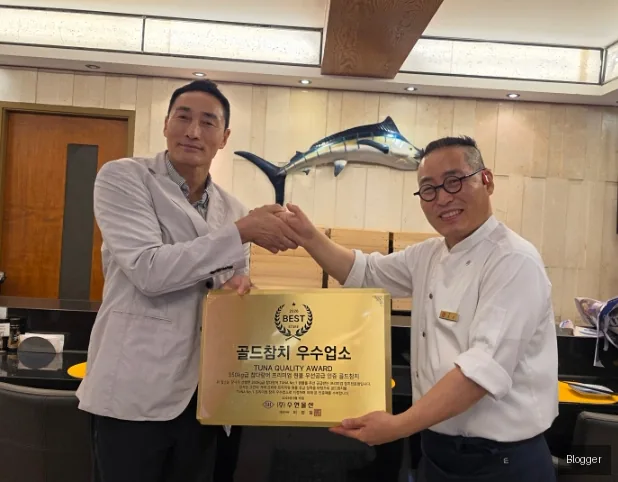
Photos of the 'Goldtuna Quality Award' plaque presentation at the Goldtuna Bangi branch and the plaque installed at the entrance.
1. Why We Select Large Bluefin Tuna
In the seafood market, small Yellowtail and Giant Yellowtail (dae-bang-eo) are the same species, but they are never traded at the same price. Similarly, the value and evaluation of a 600g Flatfish versus one that has grown over 3kg are vastly different.
This is because the time required for growth and feeding habits differ, which directly influences the development of body mass, muscle, and fat layers.
Bluefin tuna (Hon-maguro) is no different.
In our experience handling tuna of various sizes, small tuna and large tuna show clear differences in tissue elasticity, fat distribution, color, and mouthfeel.
Mr. Tuna often jokingly refers to tuna weighing less than 100kg as 'Chick Tuna.' This isn't an official term, but a common industry expression used on-site.
Goldtuna sets a minimum of 250kg as our standard, and in practice, we primarily select 350kg-class Bluefin tuna.
This doesn't mean a fish is good simply because it's big. However, selecting a large raw fish is the first prerequisite for obtaining the specific texture, fat content, and premium cuts that Goldtuna demands.
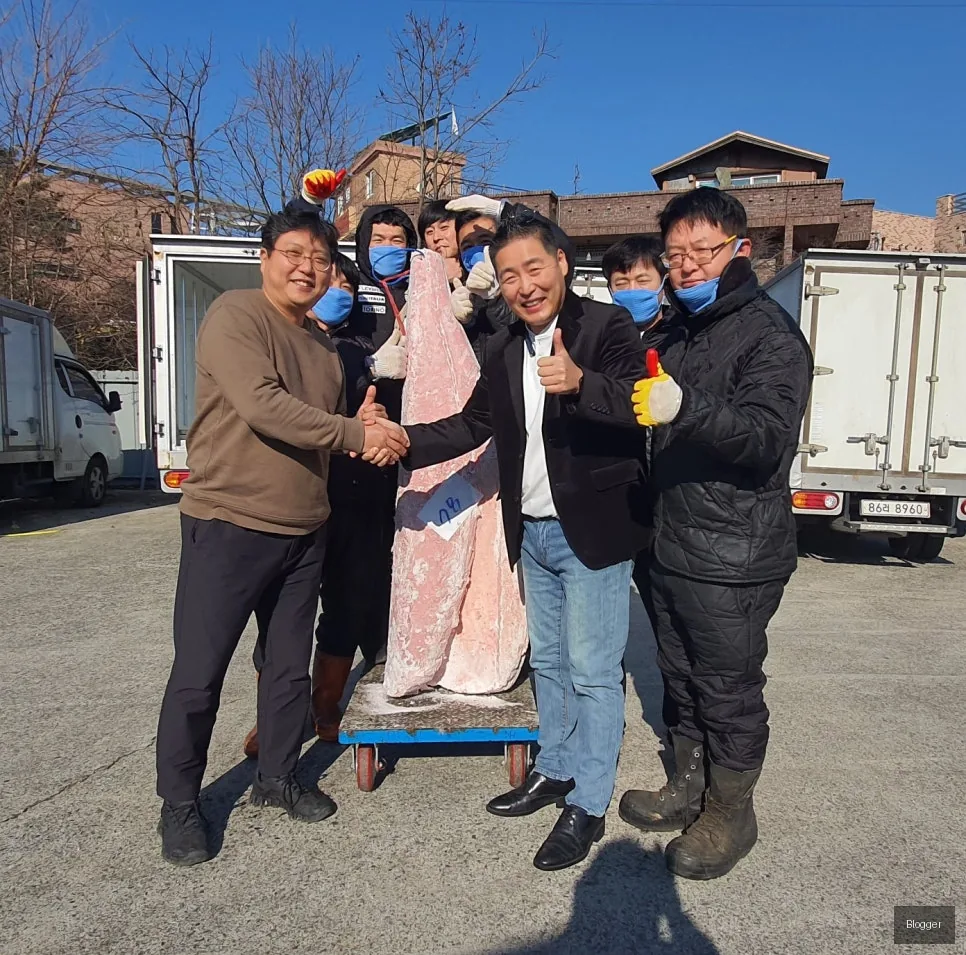
This is a tuna weighing over 400kg. The photo shows one quarter of the body marked at 78kg. When including the head, tail, gills, fins, and organs, the total weight easily exceeds 400kg.
2. Not All Bluefin Cuts are Created Equal
A single Bluefin tuna contains various parts: belly (toro), back (akami), tail, and more.
Goldtuna focuses on the belly and the front premium sections rather than the standard back or tail cuts. This is due to the significant difference in fat layers, marbling, and tissue density.
We place immense importance on Kamasal (collar), Kamatoro, and No. 1 Toro (top-tier belly).
We also use Akami (lean tuna). High-quality Akami from the front section can have a soft, creamy texture, making the selection and timing of use crucial. However, Akami is managed under separate standards from the "Tuna No. 9" explained below.
For Southern Bluefin (Minami), we primarily use the belly, and for Bigeye tuna, we select the front portion of the belly.
When Goldtuna selects its fish, we look at two things simultaneously:
How large is the tuna, and which specific cut is it?
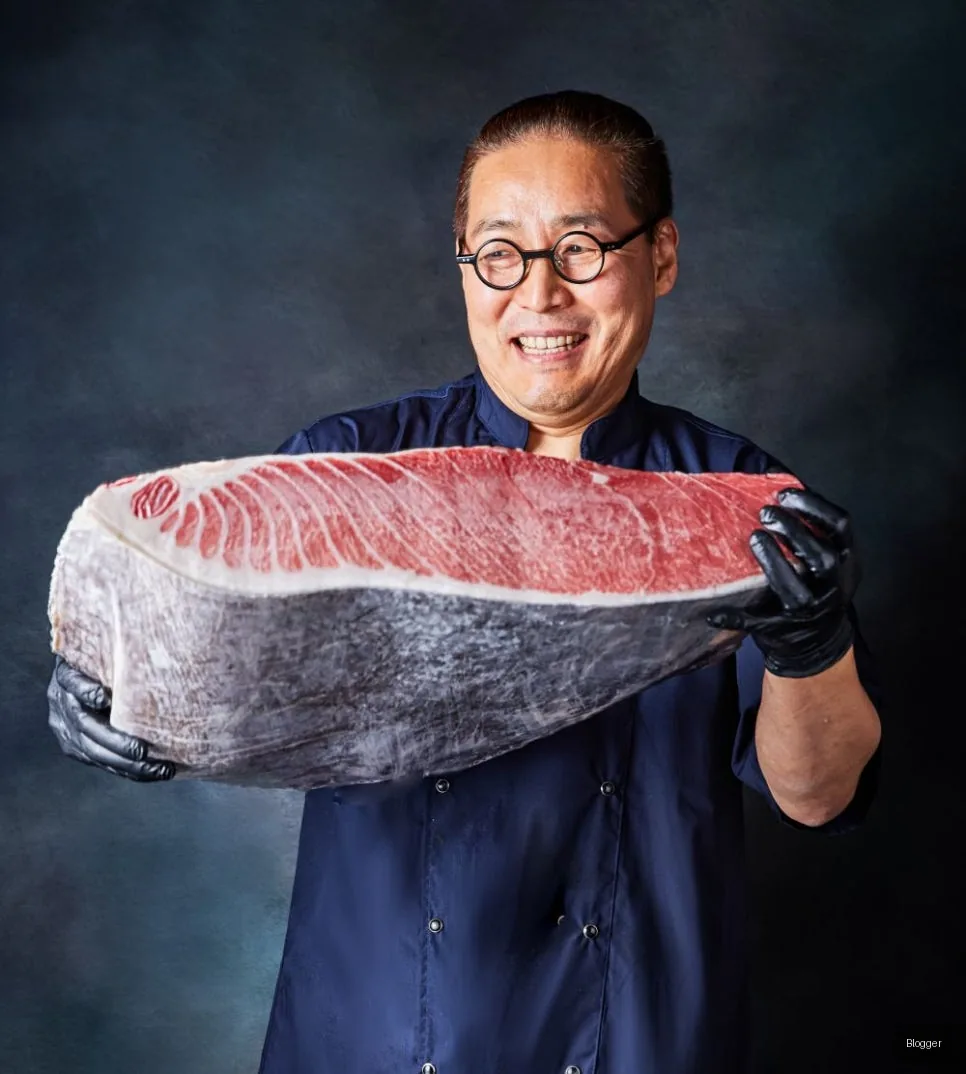
This photo shows the Kamatoro and No. 1 Toro, where the belly begins. The direction facing the head is just out of view.
3. 'Tuna No. 9' by Goldtuna
Goldtuna has established a unique quality brand called 'Tuna No. 9' to distinguish top-tier raw materials and rare cuts among large Bluefin tuna.
Tuna No. 9 is Goldtuna’s own hallmark for Bluefin tuna quality.
The baseline criteria are clear:
It starts with Bluefin tuna weighing over 250kg, though we primarily select 350kg-class giants. We focus on the Kamasal, Kamatoro, and No. 1 Toro—cuts that Goldtuna considers the absolute highest tier—as the core of Tuna No. 9.
The Kama (collar) is obtained from behind the gills where the head and body connect. Along with Kamatoro, the amount available from a single fish is extremely limited.
No. 1 Toro also comes from the front portion of the Bluefin belly, where fat layers and marbling are most developed.
Conversely, we do not refer to No. 2 Toro, standard Akami, Southern Bluefin, or Bigeye tuna as Tuna No. 9.
Tuna No. 9 is not a general term for all tuna used at Goldtuna, but an independent brand assigned only to the highest raw materials and cuts of large Bluefin.
This is why Mr. Tuna jokingly calls these cuts “the taste of capitalism—something you have to work hard to afford again.”
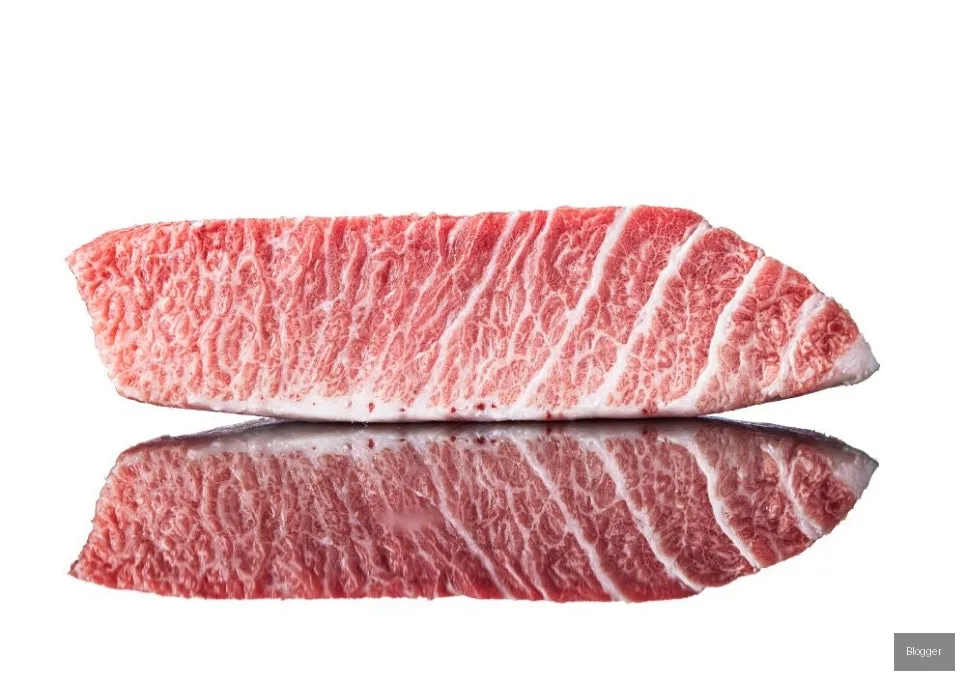
Finally, here is the expertly prepared front-most section of the No. 1 Bluefin belly.
4. Tuna No. 9 vs. Preparation Standards
Full thawing, thick slicing, and moisture removal are Goldtuna's Three Principles of Preparation.
These three rules do not define "Tuna No. 9" itself, but are technical standards applied to every single piece of tuna served at Goldtuna.
In short:
Tuna No. 9 is the standard for the raw material and cut,
while Full Thawing, Thick Slicing, and Moisture Removal are the standards for handling.
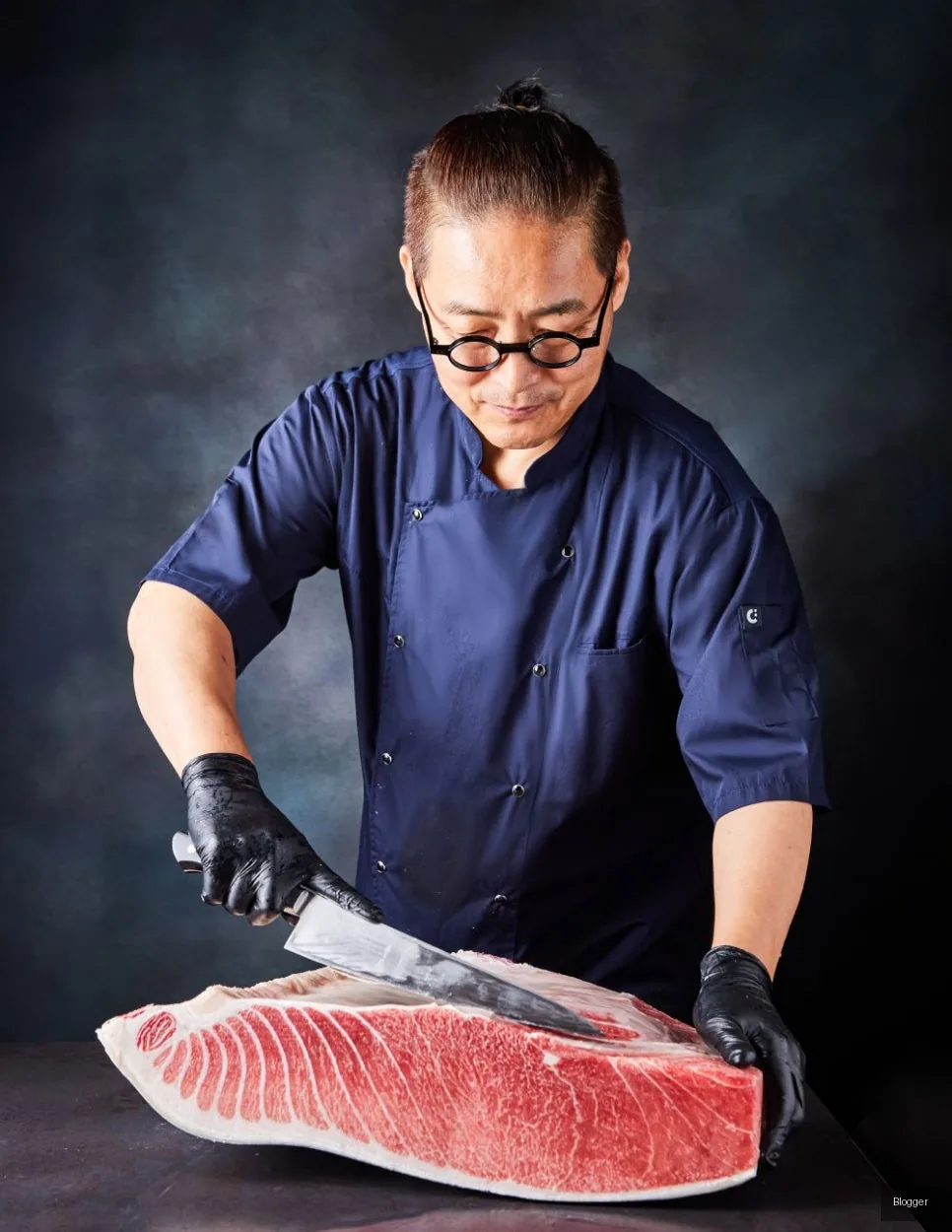
We prepare our fish like this every day. We hope nature continues to provide us with such high-quality tuna.
5. Quality Standards Over Cost
Selecting giant Bluefin tuna and sourcing specific premium cuts inevitably increases costs.
While good ingredients aren't always expensive, and expensive food isn't always delicious, consistently using giant raw materials and rare cuts makes high ingredient costs unavoidable.
Therefore, Goldtuna has established our first principle of food as Exceptional Ingredients.
We never lower our ingredient standards just to reduce costs.
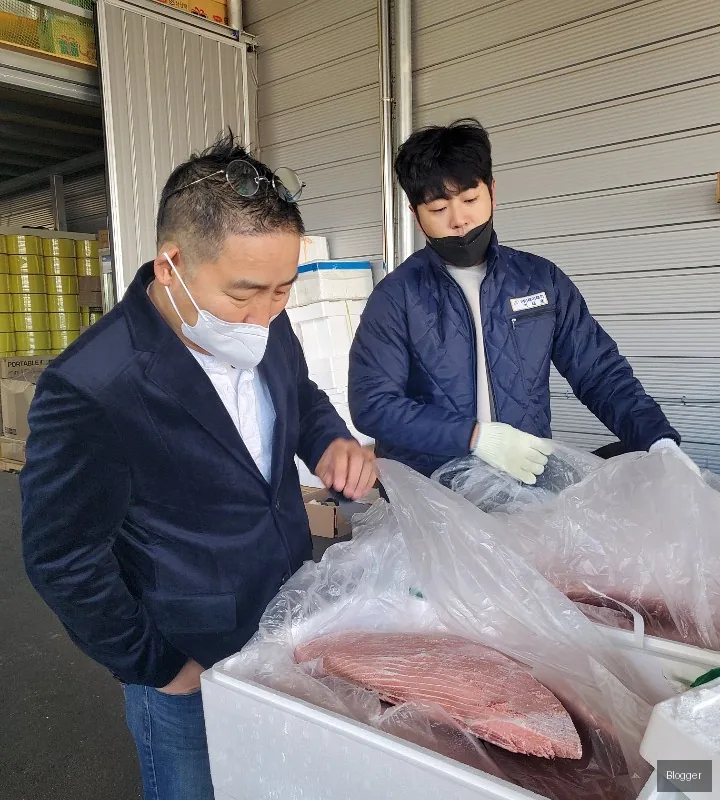
We visit the tuna warehouse daily to source the best fish. Our eyes light up whenever we discover a truly remarkable tuna.
Tuna No. 9 was born from this very principle.
Goldtuna set the standard for which Bluefin tuna to select and which cuts to use, and Tuna No. 9 is the name we gave to that unwavering standard.
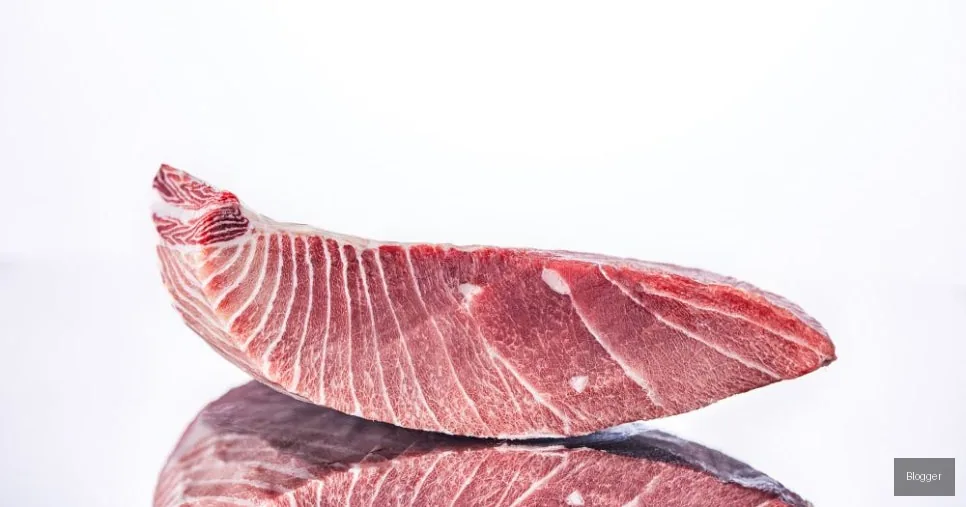
This is expertly prepared Southern Bluefin Tuna (Minami).
Read More: 5 Key Criteria for Choosing a Fail-Proof Tuna Restaurant
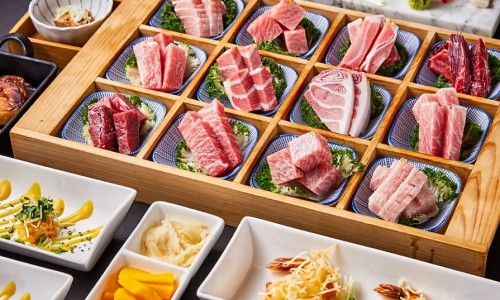
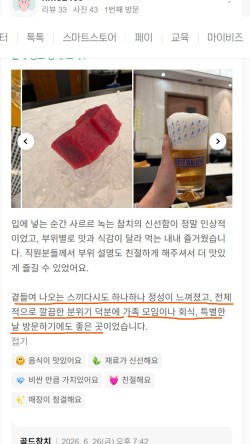
Review of a Family Gathering at Goldtuna Bangi Branch:
Goldtuna Locations: Bangi and Sinsa
Goldtuna is a 15-course premium tuna restaurant with locations in Bangi-dong and Sinsa-dong, Seoul. Both branches apply the same raw material selection and preparation standards, ensuring identical quality for Tuna No. 9 and all other Bluefin cuts.

.jpg)

댓글
댓글 쓰기