How Korean Company Dinners are Evolving: Less Alcohol, New Trends
As a tuna restaurant owner in Seoul, I have noticed a new trend lately. In the middle of the table sits premium tuna, but there is no alcohol. Some guests enjoy their meal slowly with carbonated drinks or tea. Even with fatty, rich tuna in front of them, they no longer reach for soju or sake as a default.
For a generation that always considered food and alcohol an inseparable pair, this scene was initially a bit unfamiliar.
However, looking around, this change isn't just happening in restaurants. The culture of "2nd and 3rd rounds" of drinking late into the night is fading. Instead, more people are choosing to have a high-quality meal at a good restaurant and then spend their time at cafes, shows, movies, or exercising.
Statistics confirm this shift in Korean alcohol consumption and the way people handle company dinners (hoesik).
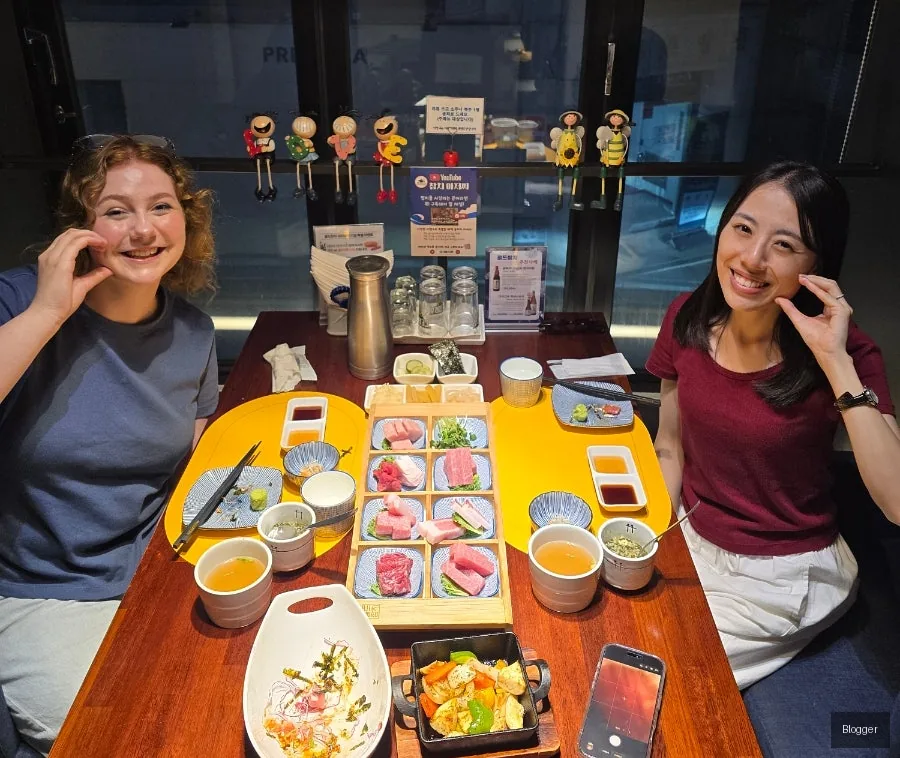
In August 2026, a Japanese friend and an American friend visited Goldtuna Sinsa. They enjoyed our tuna course without alcohol and even left a photo. We thank both of them for allowing us to share this moment in our blog.
Alcohol is not disappearing; rather, it is
shifting from the center of meals and
gatherings to being just one of many options.
South Korea's Alcohol Shipments Drop 21.5% in a Decade
The first indicator is found in domestic alcohol shipment volumes. According to the National Tax Service’s Tax Information Strategy System (TASIS), domestic alcohol shipments in 2025 totaled 2.988 million ㎘. This is the first time the figure has dropped below 3 million ㎘ in 27 years, since the financial crisis in 1998.
Compared to 3.804 million ㎘ in 2015, this represents a 21.5% decrease over 10 years.
This downward trend applies to popular types of alcohol as well. Beer shipments in 2025 were 1.519 million ㎘, down 7.2% from the previous year.
Diluted soju also fell for the third consecutive year since 2022, reaching 793,000 ㎘. Takju (rice wine) has also continued to decline since 2020.

Of course, a drop in shipment volume doesn't immediately mean everyone is drinking less. Factors like population decline, an aging society, economic conditions, and changes in distribution channels also play a role.
However, surveys on the actual consumption habits of drinkers show a similar trend.
Drinking Frequency and Quantity Are Gradually Decreasing
According to the "2025 Liquor Industry Information Survey" by the Ministry of Agriculture, Food and Rural Affairs and the Korea Agro-Fisheries & Food Trade Corporation (aT), the average monthly drinking frequency for consumers who drink at least once a month was 8.8 days. This is a decrease from 9.0 days in 2023.
The average amount consumed on a drinking day also fell from 6.7 glasses in 2023 to 6.6 glasses in 2025. The survey included 2,000 participants.
The differences by age group are also noteworthy.
The monthly drinking frequency was 7.7 days for men in their 20s and 7.2 days for women in their 20s.
In contrast, men in their 40s and 50s had a higher frequency at 10.4 days. Notably, women in their 20s had the lowest drinking frequency among all surveyed groups.
However, it is not entirely accurate to conclude that "young people these days don't drink."
For women, the average amount consumed on drinking days was actually highest in their 20s (6.6 glasses). This suggests that in the younger generation, while they may drink less frequently, they don't necessarily drink less on the days they do choose to drink.
The key change is not necessarily total abstinence, but a shift toward choosing for themselves when, with whom, and what they will drink.
From 'How Much' to 'How' We Drink
Another interesting change was found in the same aT survey. Items consumers identified as major drinking trends included convenience store purchases (85.5%), drinking at home (homsul, 54.2%), drinking alone (honsul, 52.2%), and diverse flavors (49.1%).
The report analyzed that the post-COVID trends of homsul and honsul are continuing. It noted that the drinking culture is shifting from drinking to get drunk to drinking to enjoy, leading to more diverse choices in alcohol types.
The growth of the non-alcoholic market fits this context. Citing data from the liquor industry and NielsenIQ Korea, HiteJinro Beverage's Hite Zero 0.00 recorded sales of 20.8 billion KRW in 2025, a more than 20% increase from the previous year. However, it's worth noting these are individual brand and market research data rather than national statistics for the entire market.

Ultimately, rather than a binary choice of drinking or not, the increased freedom for consumers to choose how they drink seems to be the more significant change.
Focusing on 'Time' and 'Dining' Over 'Alcohol' in Corporate Dinners
Surveys on corporate dinner culture (*hoesik*) show a similar direction.
According to a survey of 1,000 employees nationwide aged 19–59 by Embrain Trend Monitor, the most preferred type of hoesik was 'Delicious Lunch Hoesik' at 78%.
Evening drinking sessions stood at 47%, and attending cultural performances was at 39%.

The most cited reason for positively evaluating current workplace hoesik culture was 'An atmosphere that does not force drinking' (46.7%). 'Ending relatively early' was 40.6%, and 'No pressure to participate' was 35.7%.

That's not to say the old hoesik culture has completely vanished.
In a 2024 survey by Gabjil 119 (a workplace abuse advocacy group), 23.4% of employees responded that they have been forced to drink at hoesik. Interestingly, the percentage of those who refused forced drinking was highest among those in their 20s (36.7%).

Culture doesn't change overnight. However, the data suggests that the formula that a hoesik must involve alcohol is weakening compared to the past.
Choosing a Quality Meal Over the 'Second Round'
This shift poses a different question for restaurants.
In the past, when alcohol was the priority, restaurants focused on foods that paired well with heavy drinking, large portions of snacks (anju), and locations convenient for moving to the next venue.
"Is this meal satisfying enough even without alcohol?"
Tuna is a particularly interesting food to observe during this transition. Seeing people pair soju or sake with fatty bluefin tuna belly (otoro) has been a common sight for a long time. Running a tuna restaurant, I once wondered, "How can anyone eat this rich tuna without alcohol?"
But actual customers didn't always stick to that tradition.
There are tables that don't order alcohol at all, and some that only drink soft drinks. Even when they do drink, instead of finishing multiple bottles, they might share a single bottle of sake or traditional liquor to complement the food.
It's not that alcohol has disappeared; its role has changed.
A 'Dry' Evening at a Sinsa-dong Tuna Restaurant
The photo introduced at the beginning of this post was recently taken at Goldtuna Sinsa. A Japanese friend and an American friend dined together. There was premium tuna and various course dishes in front of them, but no alcohol.
This is a dinner table that defies the fixed notion that tuna must be eaten with alcohol.
At Goldtuna Sinsa, we see these types of tables quite often now. Some guests eat tuna without drinking at all, and others just have one bottle if they feel like it.
We cannot say that a few cases in one restaurant represent the entire change in our society.
However, it is worth noting that the decline in domestic alcohol shipments, changes in drinking frequency, growth of the non-alcoholic market, preference for lunch hoesik, and positive views on non-pressured drinking culture are all occurring simultaneously.
Alcohol will remain on many people's dining tables. However, the era where alcohol must be the main protagonist of a meal may be gradually passing.
From a place to meet for drinks, to a place to sit for people and cuisine.
Goldtuna Branch Information
Goldtuna is a 15-course tuna omakase (chef's choice) specialty restaurant operating at the Bangi-dong main branch and Sinsa-dong branch in Seoul. While both branches maintain the same high standards for food and tuna quality, they cater to different types of gatherings.
Goldtuna Bangi Branch (Main)
About a 4-minute walk from Songpanaru Station Exit 2, or 10 minutes from Jamsil Station Exit 8. This branch is popular for group dinners and social gatherings and operates the "Jumakase" course.
Reservation Inquiries: 010-5468-0484
Goldtuna Sinsa Branch
Located near Garosu-gil in Sinsa-dong, about a 10-minute walk from Sinsa Station and Apgujeong Station. We offer seating and private rooms ideal for small groups, business meals, and conversations. The photos for this post were taken at the Sinsa branch.
Reservation Inquiries: 010-5478-0484
Read More in Goldtuna Magazine / 5 Criteria for Choosing a Corporate Dinner Venue, Goldtuna Booking Guide
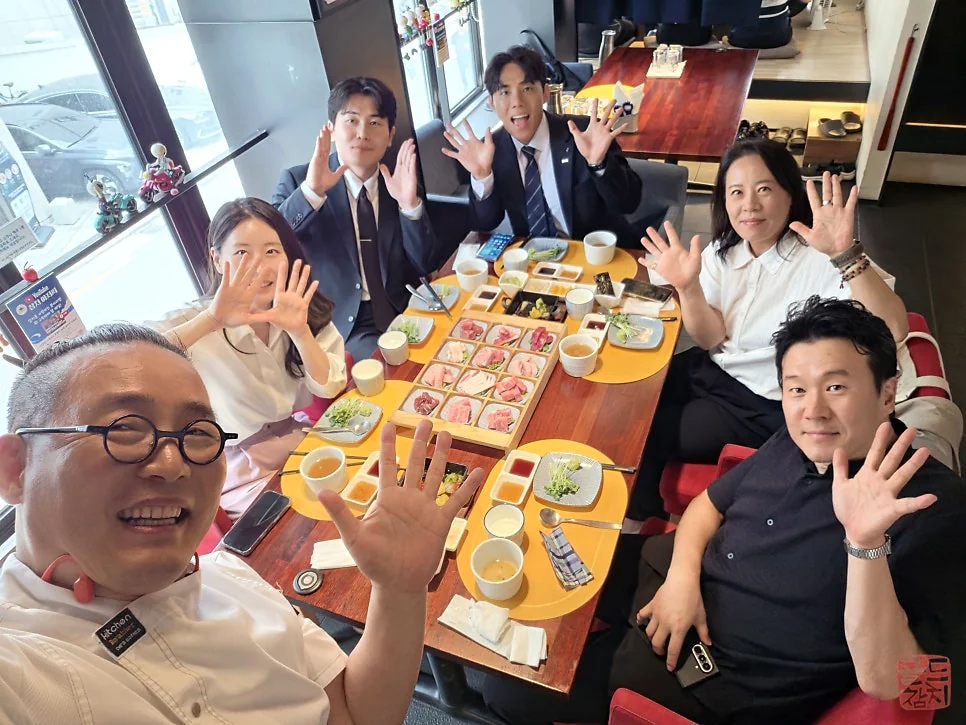
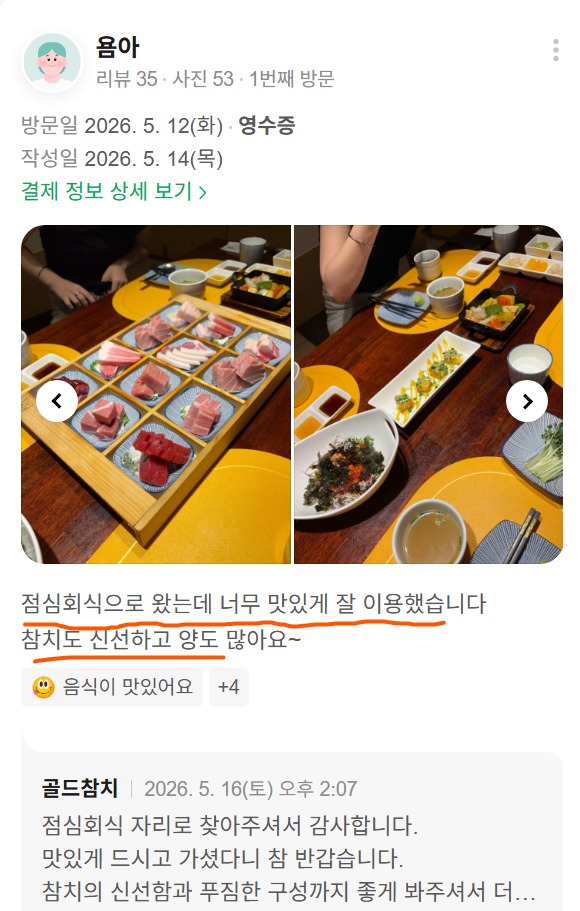
Customer Reviews of Food-Centered Gatherings /
Review of a successful lunch hoesik at the Sinsa branch
References
Major sources cited in this article include liquor shipment data from the National Tax Service, the 2025 Liquor Industry Survey by aT, corporate hoesik surveys by Embrain Trend Monitor, Gabjil 119 reports, and non-alcoholic industry data. These sources are treated as individual signals of change rather than a combined aggregate due to varying criteria.

.jpg)

댓글
댓글 쓰기