Why Bluefin Tuna Tastes Different: The Secret to Quality
Tuna isn't a dish where the flavor is created by grilling or heavy seasoning. It is an ingredient-focused cuisine where the quality depends on how the raw fish is handled and sliced.
This often leads to a common question from diners searching for the best tuna omakase:
If it's the same Bluefin Tuna, shouldn't the taste be
similar no matter which restaurant I visit?
I used to think similarly before I started running a specialized tuna restaurant. However, after years of handling tuna, I realized that the difference begins long before the chef even picks up the knife.
The quality gap starts with the size and the specific part of the fish. It is then shaped by subtle differences in thawing techniques, moisture control, slicing methods, the accompanying side dishes, and the overall dining environment.
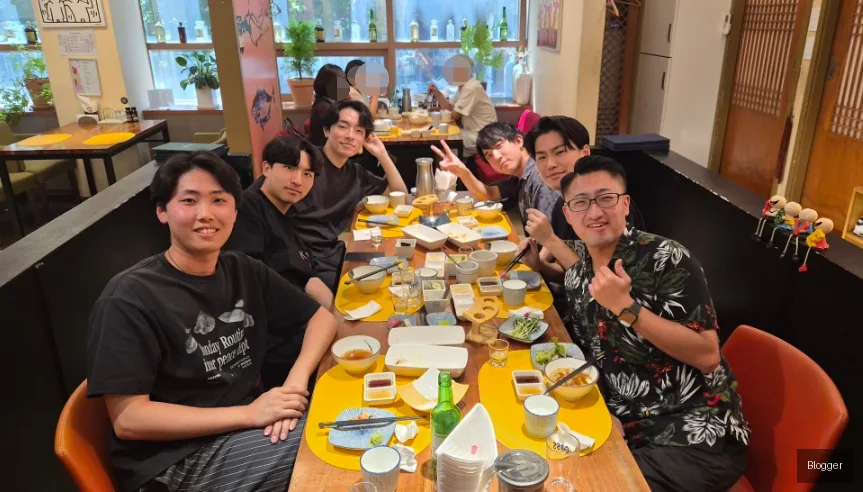
Japanese guests enjoying the Omakase Special during lunch at Goldtuna. They gave us a thumbs up and said "Oishii" (Delicious).
The Same Species Doesn't Mean the Same Quality
This distinction is easier to understand if you think about Flounder or Yellowtail.
A 600g Flounder and a Flounder that has grown over 3kg are biologically the same species, but sashimi restaurants never treat them the same. The same applies to Yellowtail.
This is because the time grown and the body size significantly change the fat formation, tissue density, and texture of the meat.
Goldtuna views Bluefin tuna (Hon-maguro) through the same lens.
We don't just look at whether it is "Bluefin tuna." We look at exactly how large the fish is and which specific parts we will be serving.
Goldtuna sets a minimum standard of 250kg and primarily selects Bluefin tuna in the 350kg range.
This doesn't mean a bigger tuna is always better by default. Rather, it is our strict standard for securing the specific fat layers, tissue structure, and premium cuts that define the Goldtuna experience.
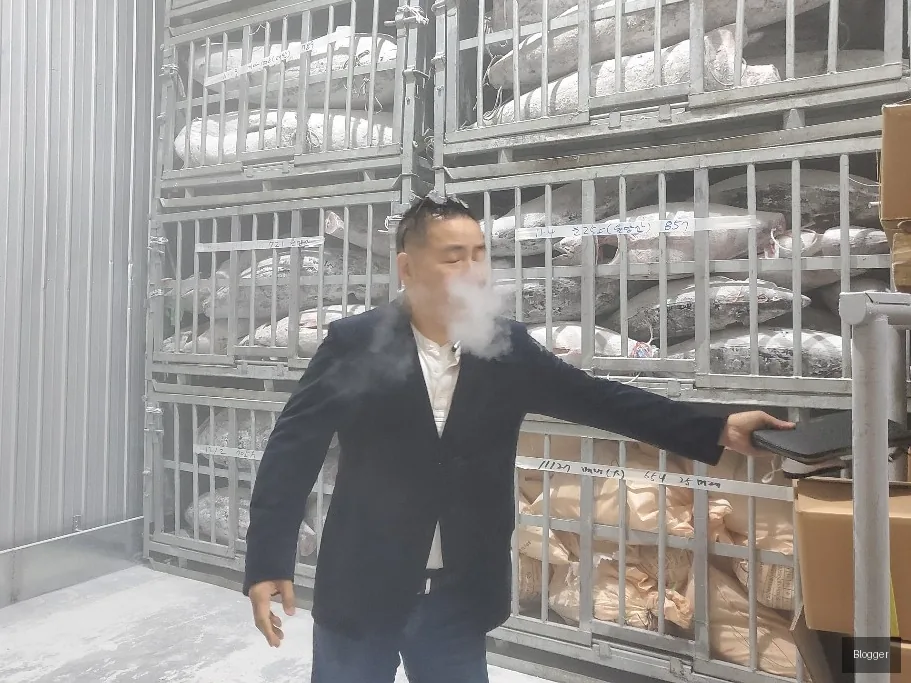
Checking the condition of the tuna at the cold storage warehouse. Goldtuna verifies the size and specific parts of the Bluefin from the initial sourcing stage.
Even with 350kg Grade Tuna, Selection Continues
The flavor and texture vary greatly even within a single Bluefin tuna.
There is the Kama (neck/collar), the belly (toro), the back (akami), and more. Even within the belly, fat distribution and texture change depending on the exact position.
After selecting a large Bluefin, Goldtuna meticulously picks the parts we need.
We primarily use the Kama (collar), No. 1 Belly, No. 2 Belly, and high-quality Akami (red meat) from the front section.
You can think of the origin of tuna flavor as a three-step selection process:
Choose the species, choose the body size, and then choose the specific cut.
The name "Bluefin Tuna" alone cannot explain these layers of quality.
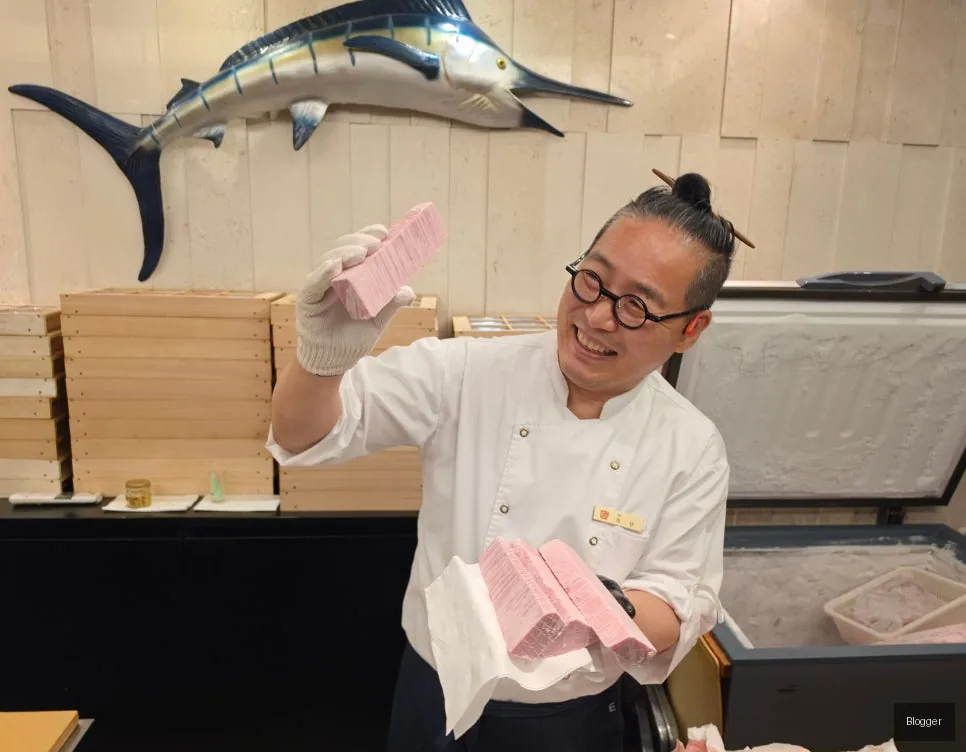
A close-up of sliced Bluefin tuna Akami (lean red meat).
The Secret Beyond Thawing Techniques
When people discuss tuna flavor, they usually start with thawing techniques. Of course, thawing, storage, and moisture management are vital. Poor handling can ruin even the highest quality raw material.
However, Goldtuna's perspective is slightly different. Any experienced tuna specialist is likely performing thawing and basic management at a high level. It's rare for professional shops to have extreme gaps in just the "skill" of thawing.
Conversely, what raw fish and what specific parts were selected from the beginning creates a different starting line altogether.
Buying good tuna and serving delicious tuna are not always the same thing.
While raw material selection determines the starting point, thawing and management are the processes of maintaining that peak condition until it reaches the guest.
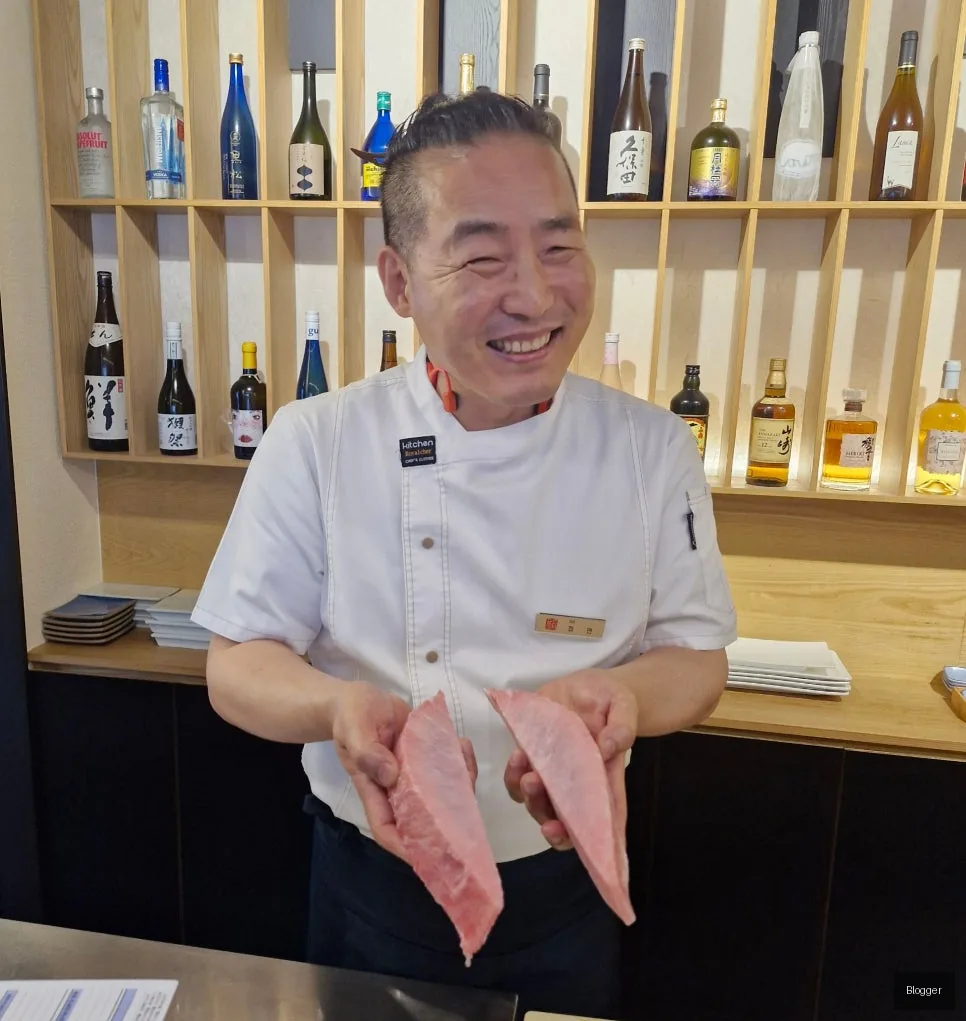
A look at our premium Bluefin Tuna Kama-toro (neck fat).
Small Differences Accumulate in Every Bite
Just because the raw material is high-quality doesn't mean the meal is complete.
Even with the same cut, the texture changes depending on how it's sliced. Surface moisture and the timing of service also play a role.
At Goldtuna, our basic principle is to fully thaw the tuna, slice it with generous thickness, and ensure all surface moisture is removed.
But another crucial factor comes into play.
Eating only tuna is a different experience compared to balancing it with sushi, grilled items, tempura, and warm dishes.
The reason Goldtuna offers a 15-course menu with various cooking styles is directly related to this. The core of the 15 courses is not just increasing the number of dishes, but allowing guests to experience different temperatures and textures that complement the tuna.
The ambiance, the tableware, the pacing of the dishes, and the staff's service do not change the tuna itself.
However, these small elements accumulate throughout the meal.
Difference starts with the raw material, and small details add up to create the final taste experienced by the guest.
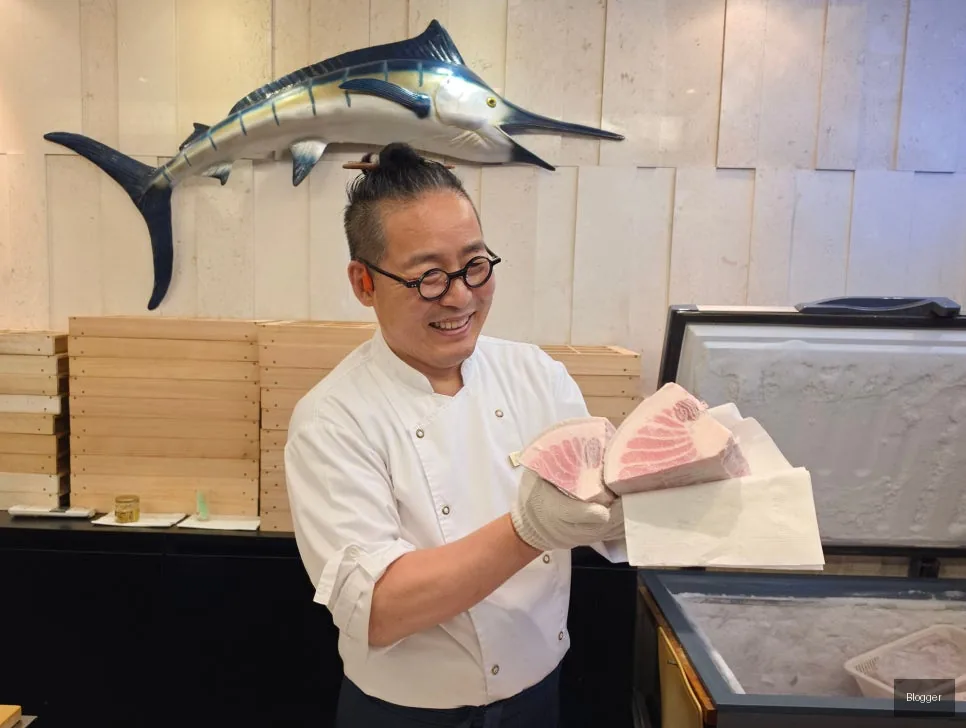
A shot of our Bluefin tuna Otoro (belly).
Japanese Guests Saying “Oishii”
Recently, a group of young travelers from Japan visited Goldtuna during lunch.
They ordered the Omakase Special and repeatedly said "Oishii" after tasting the tuna. They mentioned it was their first time experiencing tuna in this particular style.
They explained that they usually ate mostly red tuna (Akami) back home and took many photos of the beautifully marbled cuts served that day.
They didn't necessarily know our criteria for selecting 350kg fish or how we manage thawing.
And they don't need to.
A guest doesn't eat the raw material, the thawing, and the slicing separately. They eat the final piece that has undergone all those processes.
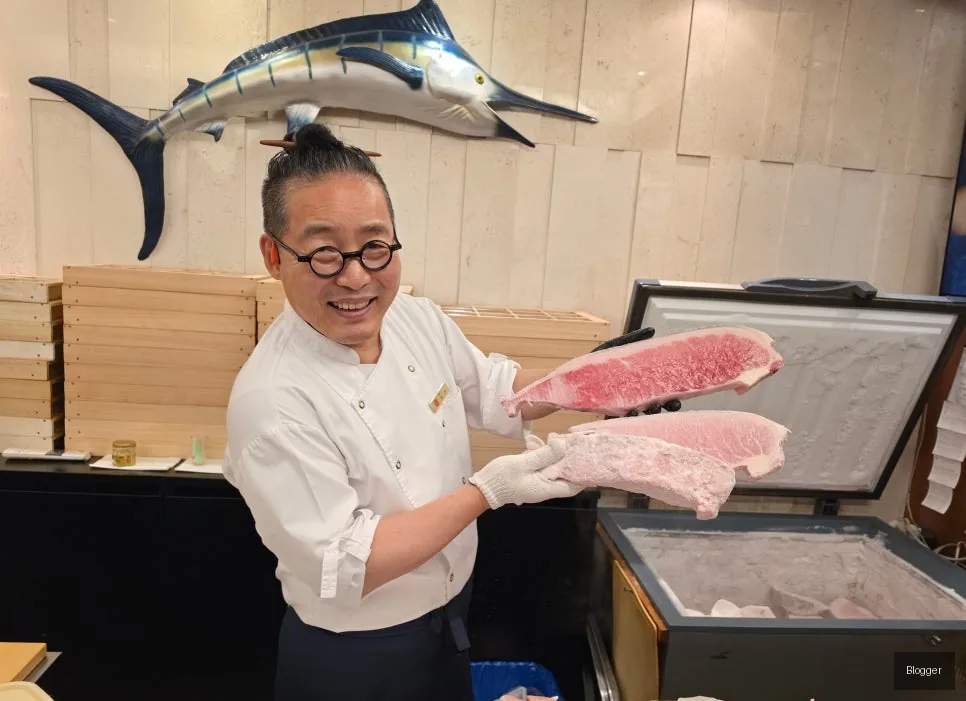
Premium Bluefin No. 1 belly (Otoro) at Goldtuna.
Why Tuna Taste Differs Between Restaurants
Using the same Bluefin tuna species doesn't guarantee the same flavor.
Size and cut selection vary. Thawing, moisture management, and slicing follow. Even the pairing with other dishes in the course affects the outcome.
Above all, Goldtuna prioritizes the ingredients. We believe it's difficult to bridge the quality gap with technique alone if the starting material isn't superior.
Once the best raw material is chosen, we apply meticulous care to ensure it reaches the guest in its most perfect state.
Tuna might look like a simple dish of sliced fish.
But the real difference in taste begins long before the first slice is made.
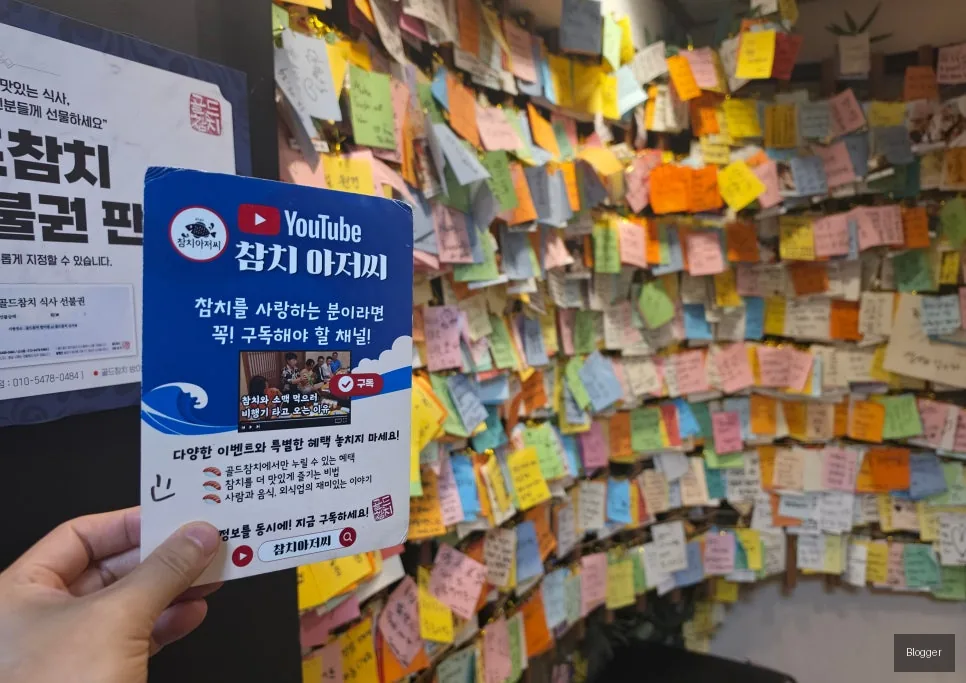
A review left by a satisfied customer near our entrance.
Goldtuna: The Differentiation Points that Complete Our Special Experience
Customer Reviews: Verifying the Difference in Cuts and Thawing
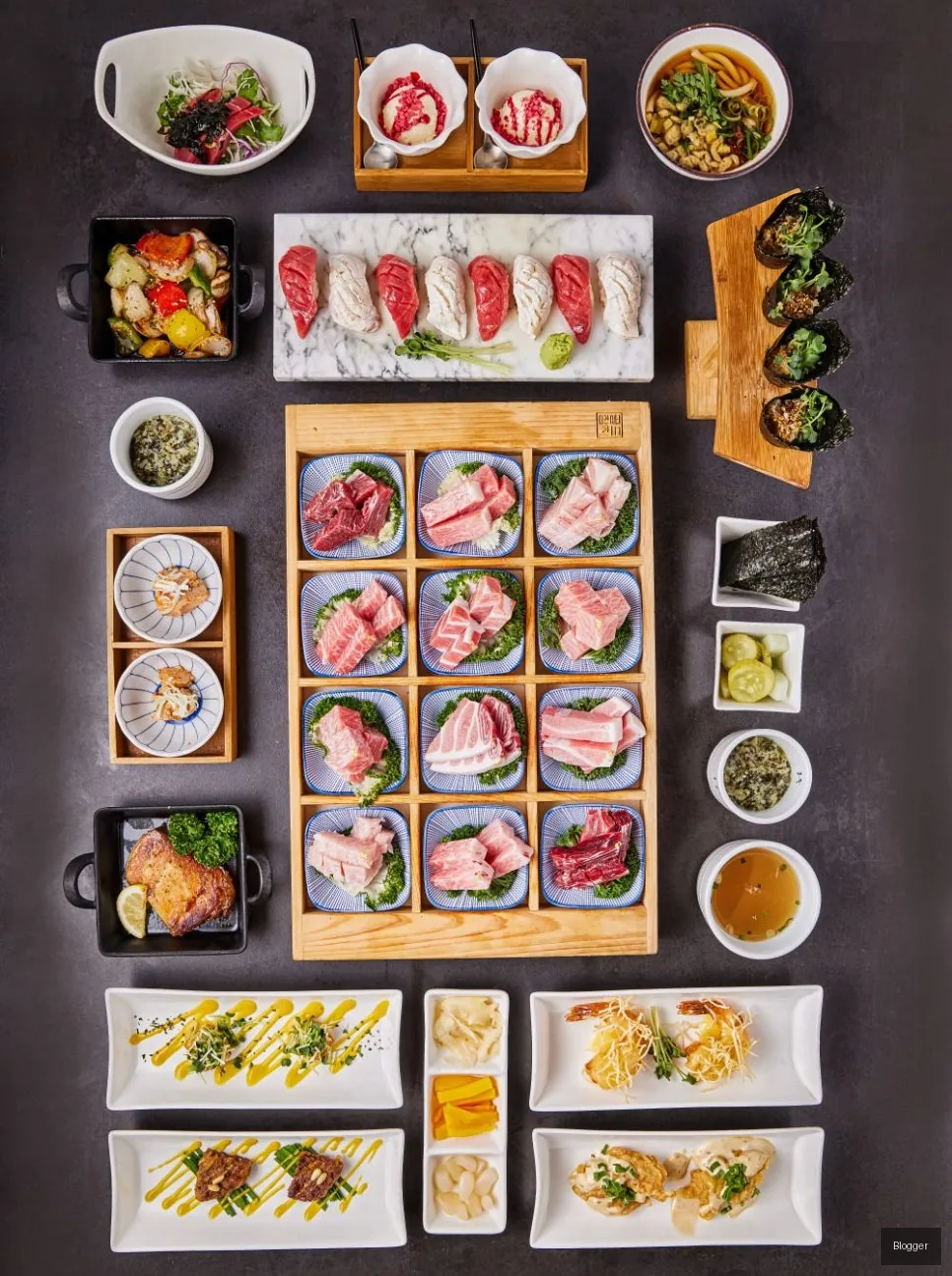
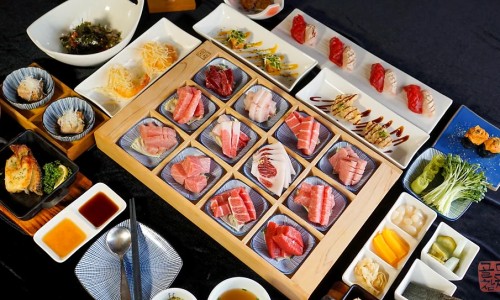
The complete Goldtuna 15-course meal presentation.
Goldtuna is a specialized tuna course restaurant with locations in Bangi-dong and Sinsa-dong, Seoul. We select 350kg-class Bluefin tuna and curate premium cuts like Kama and No. 1 Belly.
Our 15-course omakase includes not only tuna sashimi but also sushi, grilled dishes, tempura, Chinese-style specialties, and desserts.
The Bangi-dong branch is perfect for group gatherings, while the Sinsa-dong branch is designed for business meetings and private dining.

.jpg)

댓글
댓글 쓰기