Why is Tuna Akami So Delicious? The Secret to Its Rich Umami
When people first start eating tuna, their eyes are usually drawn to the flashier cuts. They begin with belly meat like Suna-zuri (belly button) and seek out Otoro and Chutoro. However, among those who have enjoyed tuna for a long time, there are many who eventually find themselves settling on Akami.
Akami, the red lean meat, lacks flashy marbling. Yet, Akami that has been carefully selected and properly handled offers a deep, rich flavor that is entirely different from other cuts.
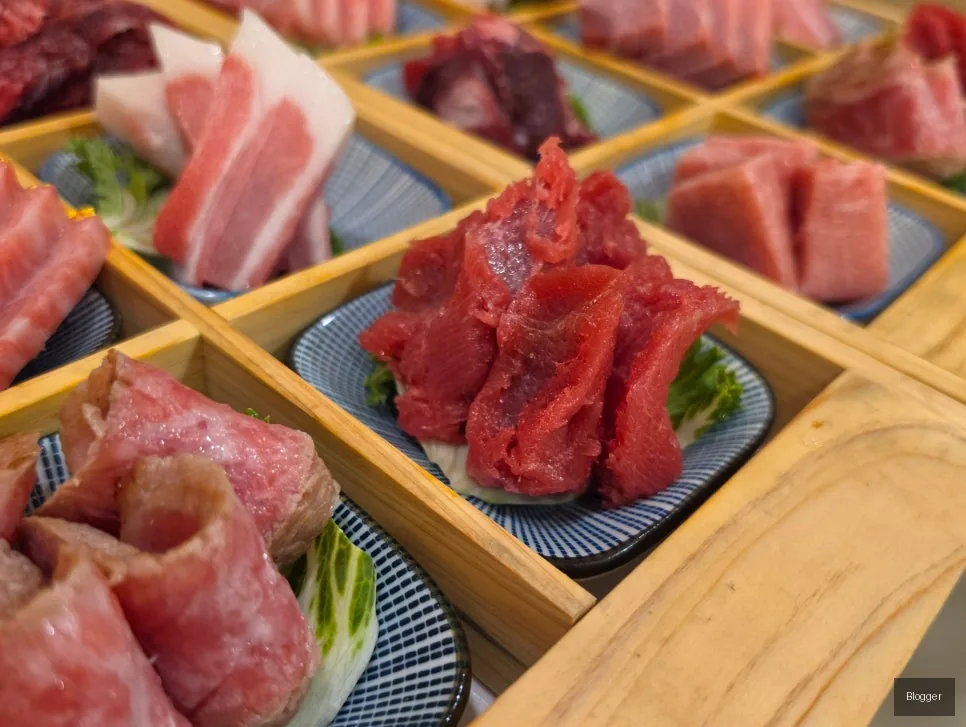
The appearance of deep red Akami
The Umami Found in Akami
The umami of fish is influenced by amino acids such as glutamic acid and components like IMP (inosinic acid).
Particularly in the muscles of fish and meat, IMP is generated during the process of ATP breakdown after death, later transforming into other substances.
Therefore, the taste of tuna is not determined solely by the amount of fat it contains.
While Otoro and Chutoro showcase the richness of fat and the flavor of marbling, Akami is the cut where you can most directly experience the flavor of the tuna muscle itself.
Some studies on Bluefin tuna have even shown Akami scoring higher in umami evaluations than Chutoro or Otoro.
However, this does not mean Akami is unconditionally the "best" cut. Fat flavor and umami are simply different axes of taste.
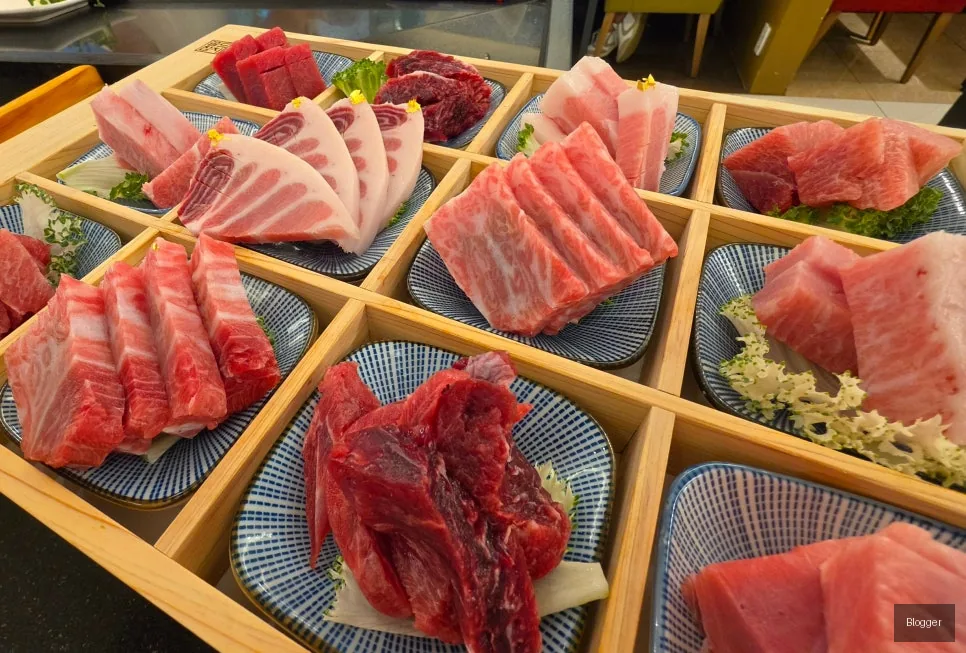
The harmony of Kamasasal and Akami
Good Akami Starts with the Quality of the Fish
At Goldtuna, we look at three main factors when selecting high-quality Akami.
First, is it Bluefin tuna?
Not all Akami tastes the same. Goldtuna specifically selects high-quality Akami from Bluefin tuna.
Second, is it a large fish with good fat formation?
This doesn't mean the Akami itself has heavy marbling. We check if the cut comes from a large Bluefin tuna where fat has developed sufficiently throughout the entire body.
Third, is it from the front section?
Rather than using all the lean meat from the tuna, Goldtuna selects Akami from the front section, where the quality is highest. Our sourcing standards specifically prioritize "selected front-section Akami" as a primary cut.
We also consider the size of the block, referred to as 'Sang' in the trade. This is because blocks from larger fish allow for a better assessment of both muscle structure and fat formation.
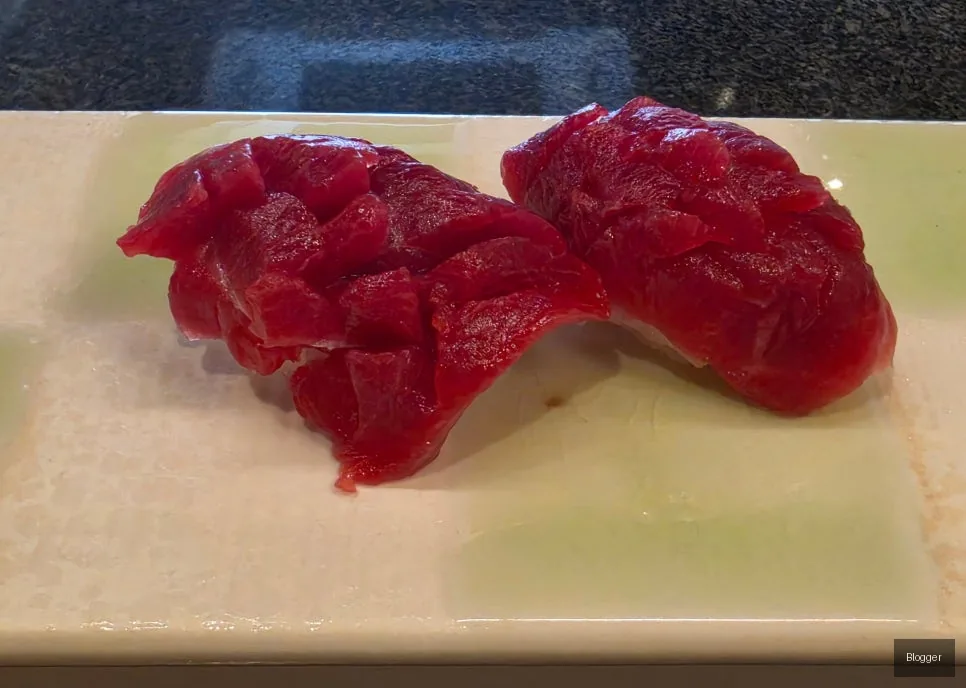
Sushi made with Akami
Timing is Even Harder Than Finding Good Fish
Even if the raw material is excellent, the taste of Akami is not always consistent. Akami varies greatly depending on thawing, aging, and the exact moment it is served.
At Goldtuna, Akami in prime condition is never crumbly; it is moist and tender.
When slicing with a knife, there is a certain viscosity where the meat feels like it is slightly clinging to the blade.
In the mouth, it doesn't feel like firm fish meat, but rather something as soft as pudding, or a texture with a fine viscosity like well-aged dough or thick honey.
This is not a description of official quality grades. It is a professional sense used in the field, honed over many years of handling tuna to distinguish Akami in its best state.
That is why Goldtuna views Akami as a ‘realm of selection and timing.’
Even for the same part of the same tuna, the results can vary significantly based on the condition of the fish, thawing, aging, and the timing of service.
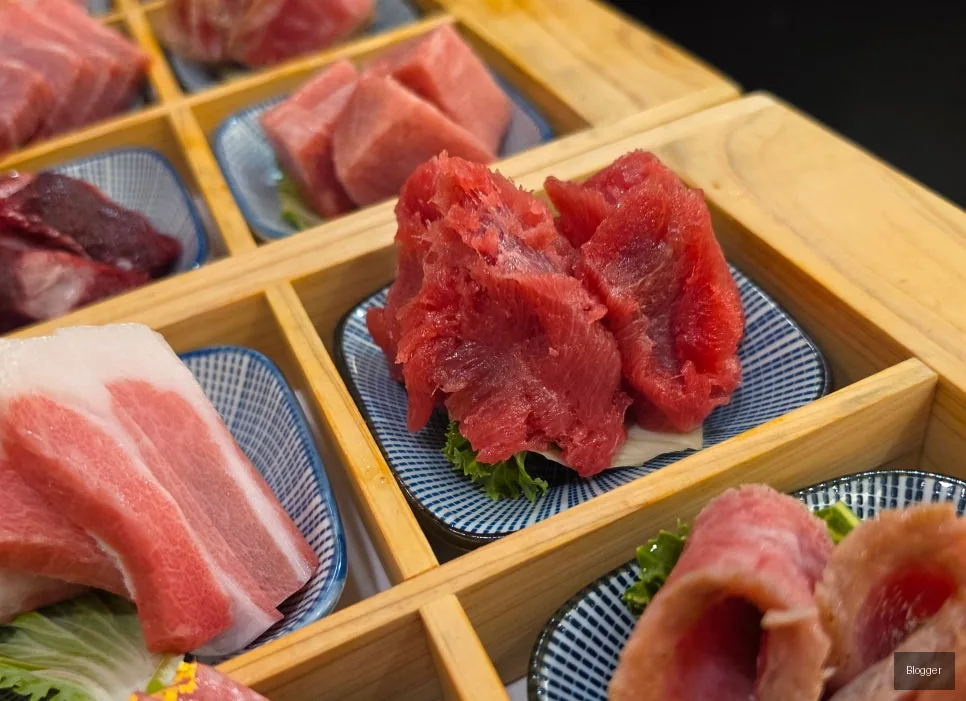
Experiencing the chewiness of Akami
The Most Comfortable Flavors Leave the Lasting Impression
In terms of price alone, the Akami we use at Goldtuna is relatively more affordable than the collar (Kama) or the fatty belly cuts.
However, we often hear surprising comments from guests after their meal.
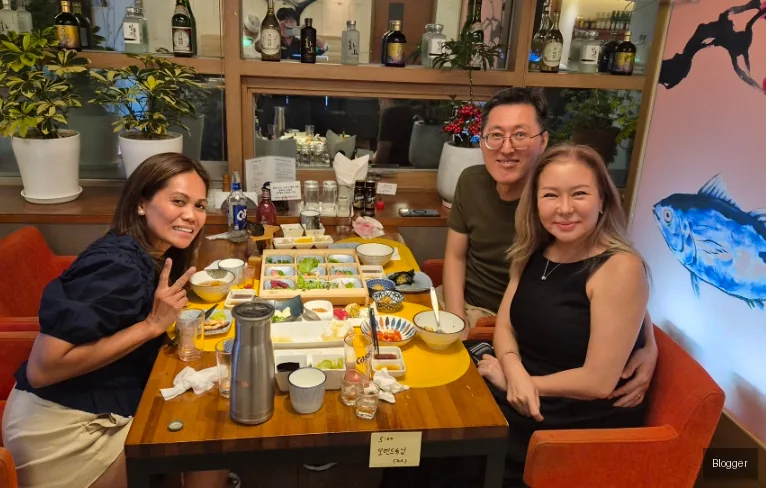
This is an actual case where a guest chose Akami as the most memorable cut, even over eye-catching parts like the belly button or Otoro.
In September 2026, three tourists from Japan visited the Goldtuna Bangi Branch. During their meal, they used a translation app to share this:
“Of everything we ate today, the Akami
was the most memorable.”
The flashiest cuts are not always the ones that leave the longest impression. When the quality of the fish, the cut location, thawing, aging, and timing all align, a good Akami showcases a moist texture and the pure umami of the tuna itself.
This is why Akami at Goldtuna is a cut that cannot be explained by a price tag alone.
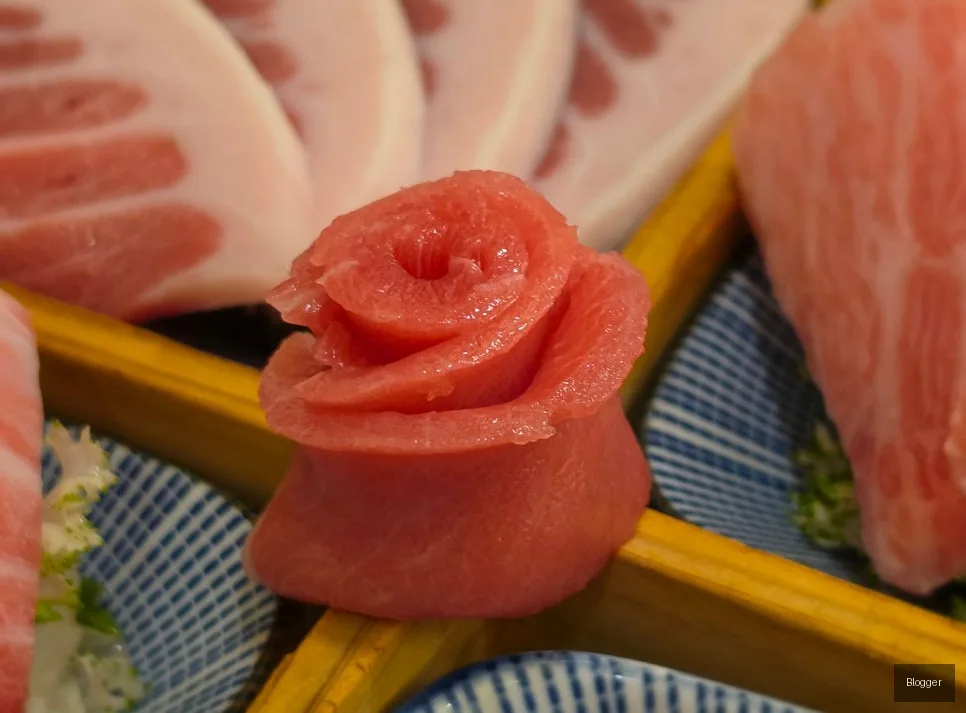
Akami expressed as a flower.
Read More
Why Does the Same Tuna Taste Different at Every Restaurant? The Real Reason That Determines the Taste of Tuna
To better understand the flavor of Akami, you can explore how fish species, size, and cut make a difference in the taste of tuna.
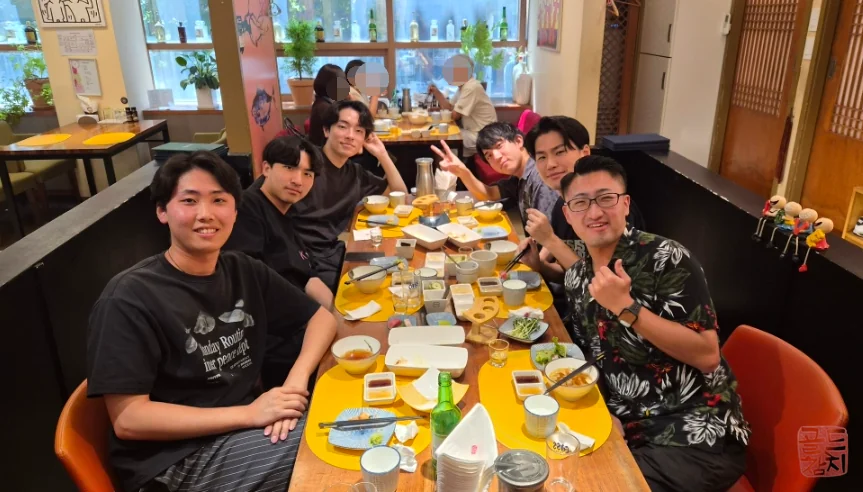
Bluefin Tuna Size and Quality Guide by Cut: Tuna No. 9
This document explains why selecting the fish size and specific cut is so important when choosing good Akami.
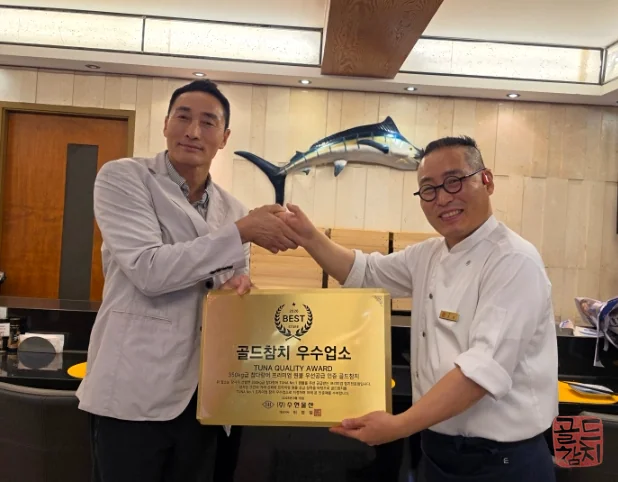
Store Information
Goldtuna Bangi Branch
This is the main branch located in Jamsil and Bangi-dong. It is a popular spot for group gatherings such as family dinners, friend meetups, and corporate dinners. It is also where you can experience the 'Somaek-imo' (Somaek Auntie) and 'Jumakase' (liquor omakase) together. The story of the Japanese tourists mentioned above was recorded at this Bangi branch.
Goldtuna Sinsa Branch
Located near Garosu-gil in Sinsa-dong. This branch is operated to cater to relatively private occasions such as business meals, dates, anniversaries, and small gatherings. Like the Bangi branch, it offers a signature 15-course meal consisting of premium tuna and various refined dishes.

.jpg)

댓글
댓글 쓰기